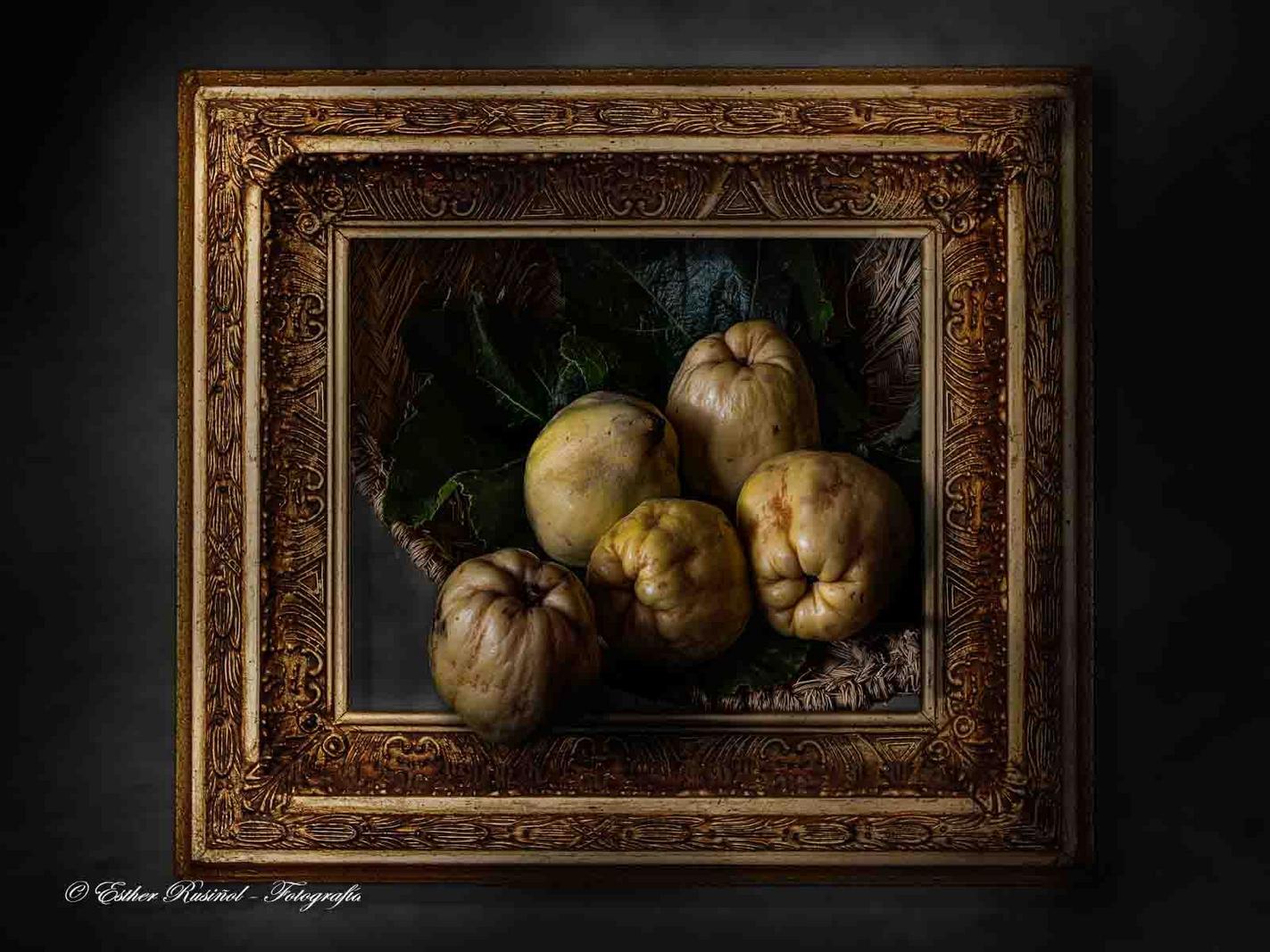
Rich, painterly still life with a bold idea — the ornate frame is both your strength and your hurdle.
Yes, this can compete — especially in club and many open competitions — but it needs refinement to maximise the concept and avoid rule pitfalls. The idea of staging quinces inside a gilded frame is clever and clearly fine‑art still life; it nods to classical painting while staying photographic. The textures on the quinces and basket are beautifully rendered, and your low‑key colour palette fits the genre well. Where it wobbles is that the frame currently dominates the picture, pulling attention away from the fruit, and your visible signature will disqualify the image in many contests. Also check rules about borders; yours is a physical prop, which is fine, but some judges will still react as if it’s a digital border. Ask yourself: when someone first looks, do you want them to see the fruit or the frame — and how can light and framing make that choice obvious?
TECHNICAL EXECUTION ★★★★
Sharpness and exposure are strong: the quinces show clean detail and the blacks aren’t noisy. The tonality is controlled with a classic, low‑key feel, and colours remain natural and muted. A couple of hotspots on the right‑hand fruit and bright rim catches on the gilded frame draw the eye more than they should, suggesting spill light that wasn’t fully flagged. Deep shadow over the leaves hides form that could add depth. The visible watermark is a technical and competition issue; most contests demand clean files. To reach ★★★★★, tame speculars on the frame, lift a little texture in the mid‑shadows behind the fruit, and submit a version without a signature.
COMPOSITION ★★★
The frame‑within‑a‑frame is an interesting structural choice and the five‑fruit cluster has a pleasing rhythm. However, the outer frame occupies nearly half the canvas, overpowering the still life and diluting the focal priority. Several fruits sit very close to the inner frame edge (notably bottom left and right), creating cramped tension that doesn’t feel intentional. There isn’t a clear “hero” fruit; all five share similar weight, so the eye wanders. A tighter crop to the inner frame or stepping closer to prioritise the arrangement would strengthen hierarchy. For ★★★★★, reduce the dominance of the ornamental border and build a deliberate shape inside — for example, a triangle with one brighter, leading quince.
LIGHTING ★★★★
The overall lighting is tasteful and painterly, with a soft, directional source from camera left that models the fruit well. Highlights add life without looking glossy, and the basket texture reads nicely. The issue is spill: the frame’s gilded edges catch brighter than the fruit, stealing attention. The leaf mass behind the fruit is almost fully submerged, losing a useful dark‑green counterbalance. Flagging the light or using a grid to keep it off the frame, plus a small white card to lift the shadow sides of the front quinces by a third of a stop, would refine it. Those tweaks would earn a top rating.
STORY ★★★
The concept reads: a photographic still life presented like a painting. That meta idea is interesting and pushes beyond “fruit on a table.” However, because all fruit share equal weight and expression, there’s limited sense of moment or hierarchy inside the scene. A single fruit with a stronger stem, a leaf curl, or a slight separation could create a focal gesture and a clearer point of entry. Consider what season or mood you want to suggest — abundance, age, luxury — and style the arrangement to underline that message. What story do the blemishes tell here: rustic authenticity or neglect?
IMPACT ★★★★
The immediate visual hit comes from the ornate frame and the moody tonality — it’s distinctive and memorable. Texture is rich, and the classical reference gives it gallery potential. Impact is held back by the frame competing with the subject and by the watermark, which breaks immersion and will get you marked down. With a tighter focus on the fruit and more deliberate leading light, this would jump a level. Remove the signature, and the piece will present as far more confident and competition‑ready.
CONSTRUCTIVE NEXT STEPS
- Re‑stage or re‑frame so the still life fills more of the picture: either crop to the inner frame or shoot closer/longer focal length so the fruit dominate and the outer frame becomes a supporting edge, not the main event.
- Control spill on the gilded frame: add a flag or grid to your key light and use a small white bounce card on the shadow side of the fruit to lift mid‑tones by ~1/3 stop; aim for the brightest area to be your chosen “hero” quince.
- Guide the eye with micro‑styling: pick one feature fruit (stem/leaves intact), separate it slightly, and arrange the others into a triangle or arc that points back to it; avoid having fruit touch or crowd the inner frame edge.
- Post‑process with subtle dodging/burning to shape the cluster and lift a hint of detail in the rear leaves; remove the watermark and tidy any bright nicks on the frame that pull attention.
AI Version 2.12