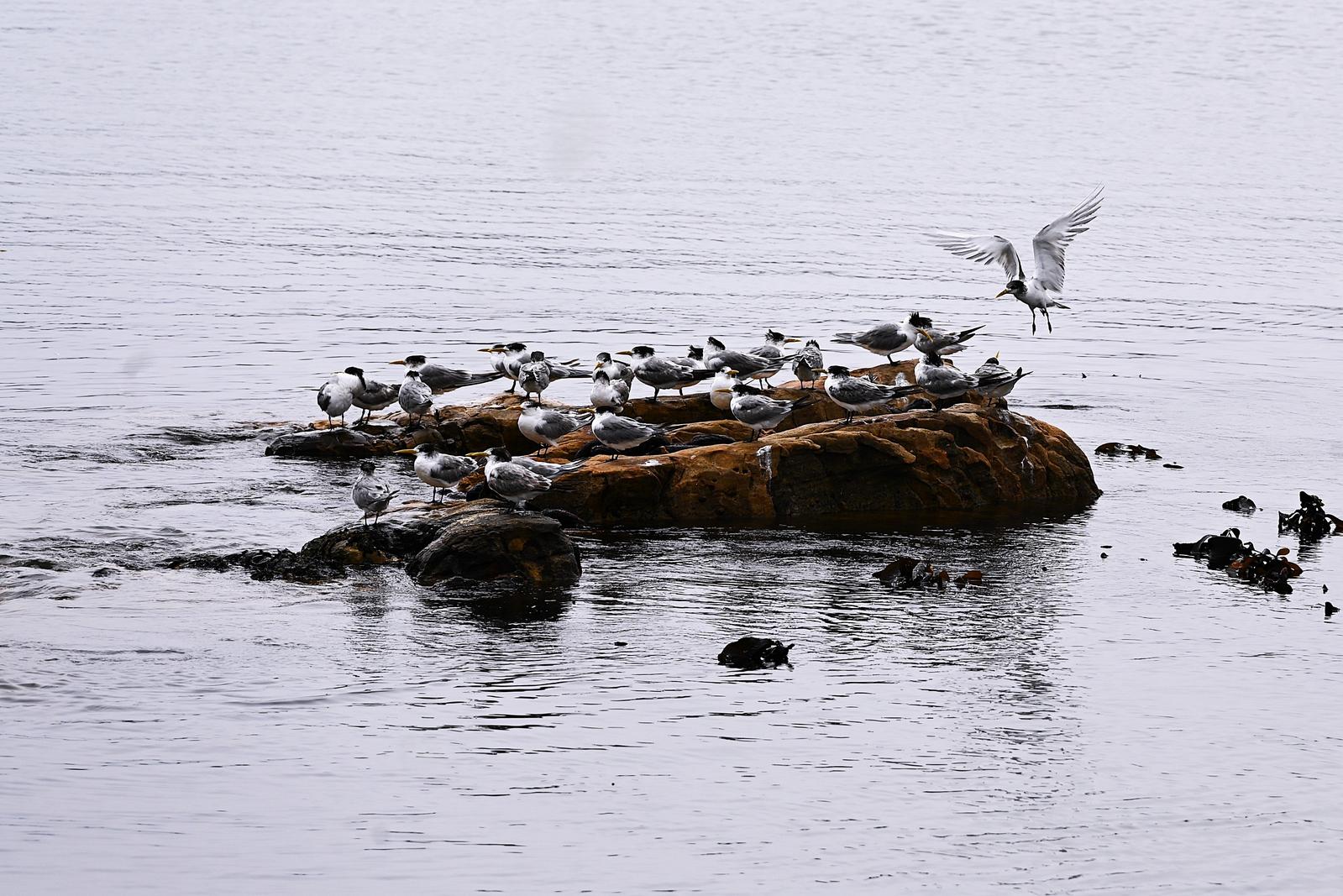
A calm coastal scene lifted by one decisive wingbeat.
Your idea reads: a crowded roost using a lone rock as refuge, under quiet, grey light. The photograph sits in wildlife territory, and the strongest element is the bird landing on the right with wings spread — that gesture gives the scene its moment. The wide frame of water reinforces the sense of isolation you mention. The image works as a behaviour note, but it doesn’t yet give us a clear hero within the flock, so the eye wanders. Consider how timing, spacing, and a slightly different vantage could make that “safe rock” feel even more like a stage for a single, memorable action.
TECHNICAL EXECUTION ★★★
Exposure is controlled and the muted palette fits the overcast conditions; no heavy processing or colour issues jump out. Detail on the perched birds is acceptable, but not biting — the file feels a touch flat and low in micro‑contrast. The landing bird shows motion blur and/or slight misfocus, which weakens the key gesture. Noise is unobtrusive, suggesting a moderate ISO, but the overall crispness could be higher for wildlife. To reach five stars you’d need tack‑sharp focus on the primary subject (ideally the eye of the landing bird) and a bit more tonal separation to bring feather detail alive.
COMPOSITION ★★★
The flock forms a horizontal mass centred on the rock, and the incoming bird provides needed tension on the right. However, there’s a lot of similar‑toned water on the left that doesn’t add information, while the seaweed clusters on the lower right pull at the eye. The landing bird is very near the right edge with little “runway” to fly into; that crowding reduces the sense of flow. A tighter crop from the left and bottom, or framing in‑camera with more space to the right, would concentrate attention where the action is. How might a lower or slightly closer position simplify the background and reduce the mergers between overlapping birds?
LIGHTING ★★★
Soft overcast keeps contrast manageable and avoids harsh highlights on the white plumage — a sensible choice for seabirds. The trade‑off is a flat, grey scene with limited sparkle or catchlights, so the birds don’t quite pop from the water. A touch more direction or a moment of brighter break in the cloud would add shape to the wings and rock. In processing, gentle local contrast and a subtle dodge on the landing bird could simulate some dimensionality without faking the light. Five stars would require light that sculpts the subjects or a moment when the bird’s white wings catch a brighter patch of sky.
STORY ★★★
The narrative is clear enough: a communal roost, and one tern committing to land. That single gesture is the heartbeat of the frame, but the surrounding birds read as a dense, undifferentiated crowd. A cleaner silhouette of the landing bird or a small gap between individuals would strengthen the sense of arrival and safety you aimed for. Waiting for a fish in the beak, a squabble, or a mid‑air stall would elevate this from record to story. What behaviour were you hoping to catch beyond the landing — and did you consider isolating just two or three birds to show their interaction more clearly?
IMPACT ★★
It’s a pleasant, honest scene, but not yet a memorable one. The gesture is good, yet softness and loose framing dilute the punch. Similar images of roosting seabirds are common; to stand out you need either extraordinary timing, intimacy, or light. Sharper focus on the landing bird with more space to fly into, or a bold crop that removes distractions, would lift the presence considerably.
CONSTRUCTIVE NEXT STEPS
- Prioritise shutter speed for action: aim for around 1/1600–1/2500 s, continuous AF (tracking) and high‑speed burst to freeze the landing bird while keeping ISO reasonable.
- Frame with intent for direction: when a bird is landing, leave extra space on the side it’s moving toward; here, compose with more room to the right and trim 15–20% from the left to concentrate the moment.
- Clean the scene: either move a step to exclude the seaweed clumps on the lower right, or clone them out in post; then add subtle local contrast/clarity and a gentle dodge on the landing bird to make it the clear focal point.
- Watch for separation: wait for a beat when the landing bird’s wings are fully open and not overlapping others, or use a longer focal length to isolate a smaller group for cleaner silhouettes.
AI Version 2.12