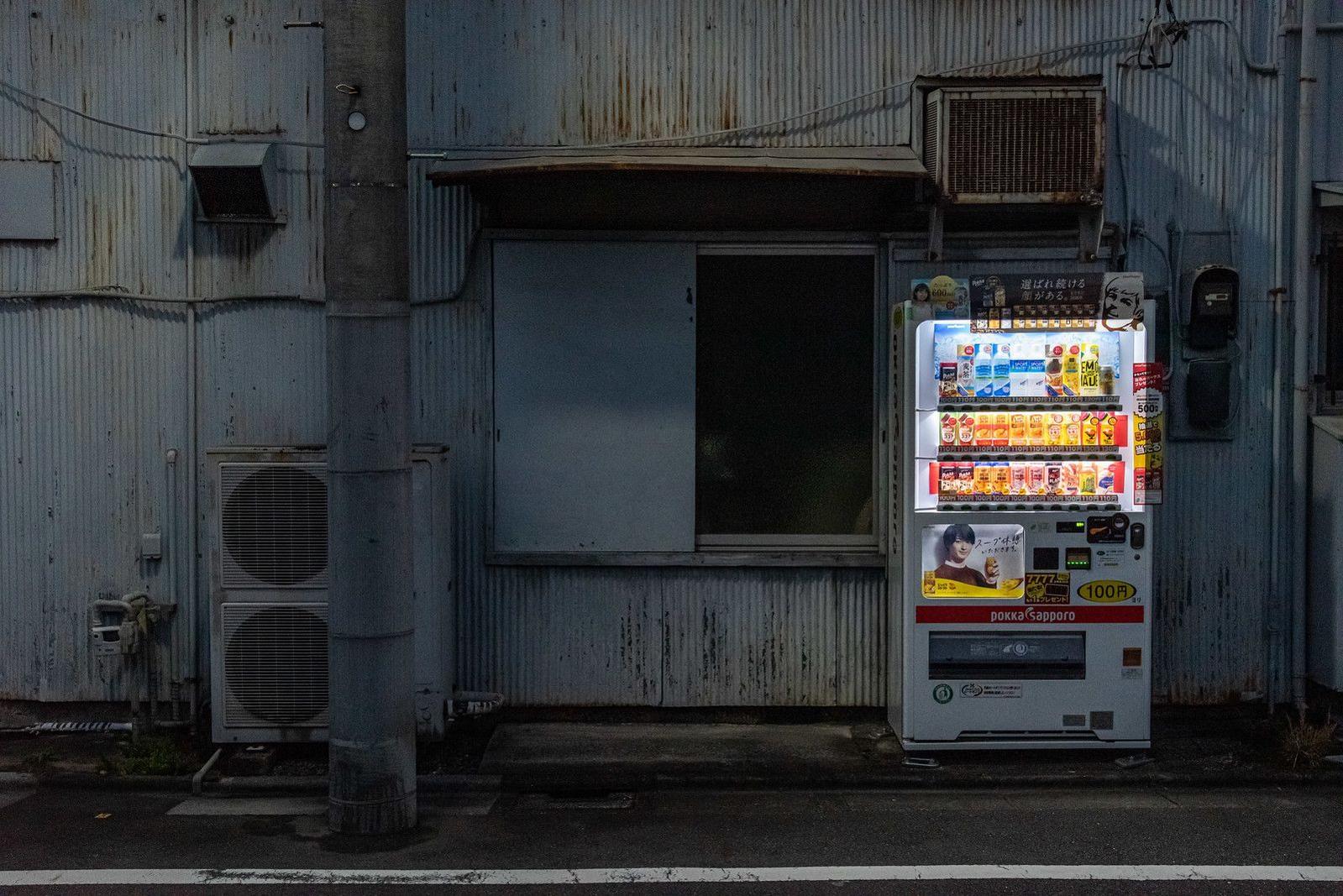
A quiet street scene where a single vending machine becomes the lighthouse in the dark.
You’re on the right track: the strongest quality here is the cool, grimy corrugated wall set against the warm, candy‑box glow of the machine. This reads as an urban street image, and the colour contrast already carries much of the mood. To push the temperature separation in processing, keep the background authentically cold and desaturated while letting the machine stay slightly warmer and cleaner — but avoid cartoonish saturation. In Lightroom/ACR, make two masks: one for the machine and one for everything else. Cool the wall with a WB shift toward blue/green, drop saturation a touch, and lift the blacks slightly to keep it murky; then warm the machine a little, add micro‑contrast and a controlled bump in vibrance, watching the highlights. One question for you: did you consider shifting a step or two right to clear that central pole and give the vending machine more breathing room?
TECHNICAL EXECUTION ★★★★
Exposure is handled well for a high‑contrast night scene; the machine’s details are readable without turning the surroundings into a noisy soup. Shadow noise is present in the corrugated wall but stays within acceptable bounds for this genre. White balance is neutral overall, which makes the temperature contrast feel subtler than your intent — this is fixable with local WB and colour‑grading masks. Sharpness on the machine looks crisp; nothing critical is soft. To reach ★★★★★, reduce shadow noise with selective denoise, recover the brightest labels to avoid tiny clipped patches, and apply deliberate split‑toning rather than global WB to separate zones.
COMPOSITION ★★★
The vending machine on the right third is a solid anchor, and the dark window behind it helps it pop. However, the thick concrete pole left‑centre is a visual roadblock; it cuts the frame in two without adding meaning. The bright white road line along the bottom edge also pulls the eye away from your subject. A tighter crop from the left and bottom, or a small shift in shooting position to place the pole fully left or exclude it, would give the machine stronger dominance. For ★★★★ or ★★★★★, either embrace a more symmetrical, graphic arrangement or craft a cleaner right‑weighted frame with fewer edge distractions.
LIGHTING ★★★★
The available light is doing the heavy lifting: the vending machine’s internal glow against the dim street sets a clear mood. Mixed colour temperatures are part of the story and are mostly controlled. The surrounding wall is a touch muddy; a subtle lift of shadow detail and a cooler tint would make the warmth of the machine feel even richer. Consider a gentle dodge on the pavement directly in front of the machine to imply spill light and guide the eye. Five stars would need even more deliberate separation through local colour grading while keeping highlights intact.
STORY ★★★
The frame communicates a quiet, after‑hours street with a lone, inviting machine — a clear, if minimal, narrative. What’s missing is a moment: no human gesture, no small surprise to make this a scene that could only happen at that instant. Waiting for a passer‑by to lean in, or a cyclist streaking through the light, would add tension and purpose. As it stands, it’s an atmospheric still life of place rather than a decisive moment. To climb higher, integrate a human element or a transient detail illuminated by the machine’s light.
IMPACT ★★★
The image is moody and coherent, and the colour contrast is appealing; it will hold a viewer for a beat. The composition’s pole and the bright road stripe reduce its punch, and the familiar subject (a glowing vending machine at night) limits originality. Stronger geometric control or a human moment would elevate memorability. With cleaner edges and bolder temperature separation, this could move from “nice mood” to “must‑pause” territory.
CONSTRUCTIVE NEXT STEPS
✓ Local colour grading: mask the vending machine and warm it slightly (+500–1000 K), add +10–15 vibrance and a touch of clarity/micro‑contrast; create a second mask for everything else and cool it (shift WB toward blue/green), reduce saturation a little (−5 to −10), and lift blacks marginally to keep the gloom believable. Use the Colour Grading panel for warm highlights and cool shadows (low saturation, 6–12) to cement the split.
✓ Clean the frame: crop 5–8% from the bottom to remove most of the white road line and a little from the left to lessen the pole’s dominance. If you re‑shoot, step a pace right to push the pole to the edge or exclude it entirely.
✓ Manage noise and highlights: apply selective denoise to the wall and pavement; on the machine, pull highlights −10 to −20 and add a gentle curve for contrast so labels stay readable without looking clipped.
✓ Consider a moment: on a revisit, wait for someone to buy a drink, their face or hands lit by the machine. A small human gesture will justify the scene and raise the image from atmosphere to story.
AI Version 2.0