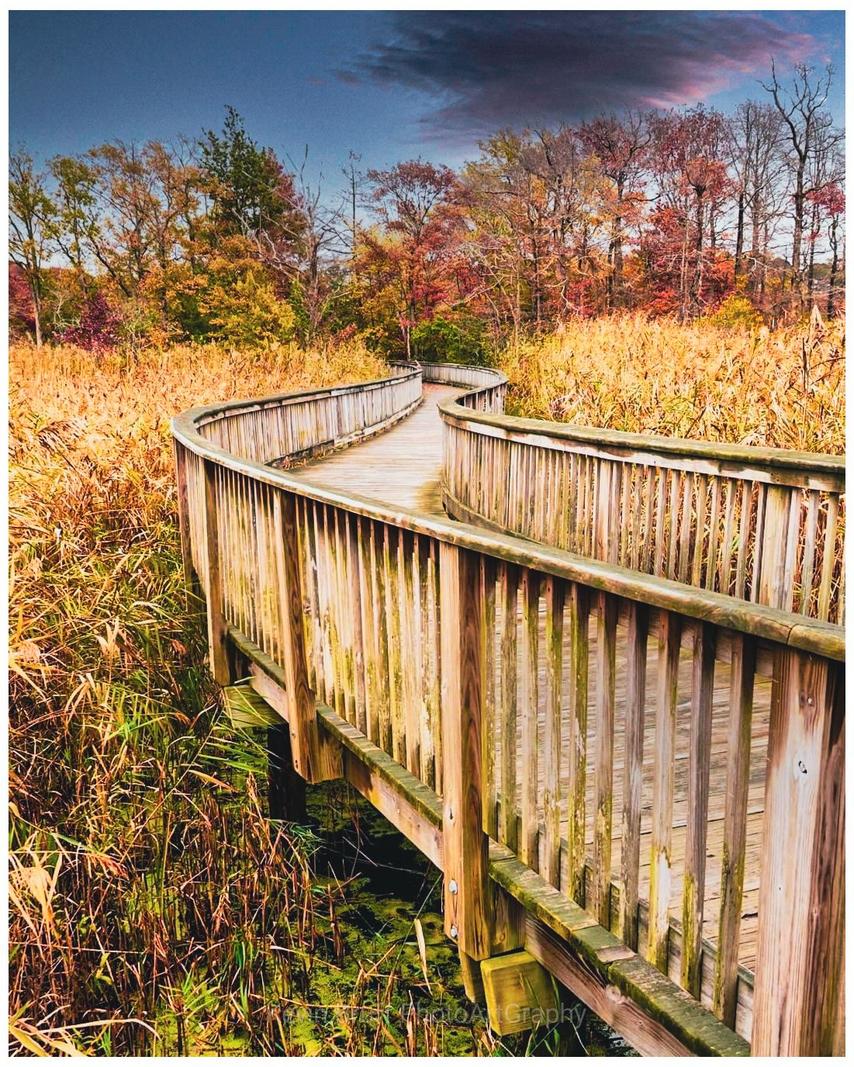
A strong S‑curve and autumn tones, but the heavy HDR treatment is stealing the show from the scene.
Thanks Kevin. You’ve clearly aimed to hold detail in the bright sky and the darker reeds, and the boardwalk is a great subject for that. However, the HDR processing feels pushed: colours are amped, micro‑contrast is high, and the sky looks darker than the light on the land, which breaks realism. Ask yourself: what did the light actually feel like, and does this rendering reflect that? This is a landscape image with strong graphic potential; if the processing stepped back, the shape of the path could carry the frame on its own.
TECHNICAL EXECUTION ★★
Detail is generally sharp and there’s no obvious noise, but the processing is heavy-handed. The reeds and wood show crunchy micro‑contrast and saturation that hint at tone‑mapping. The cloud mass is overly dark compared to the lit foliage, suggesting an HDR blend that has inverted the natural tonal hierarchy; slight haloing along the treeline is visible. Colour balance leans warm with a hint of green in the shadows. The white border and visible watermark further reduce polish. To reach five stars, start from the raw, keep a single exposure or a gentle manual blend, remove halos, reduce vibrance, and present without a border/watermark.
COMPOSITION ★★★★
The S‑curve boardwalk is an excellent anchor that pulls the eye through foreground, midground and into the trees. The frame is balanced with good depth, and the railings create pleasing rhythm. The right railing kisses the edge a bit tightly; a few centimetres more space or a slight crop from the right would feel less cramped. The sky occupies a lot of weight because of the dark cloud; trimming a little off the top would emphasise the path. How might a slightly lower viewpoint have amplified the curve and simplified the distant treeline?
LIGHTING ★★★
The light appears soft and late‑day, which suits the subject, but the HDR treatment flattens the natural fall‑off. The sky reads darker than the landscape, which feels inconsistent with the scene. There’s enough contrast to define the rail texture, yet the mood becomes muddied by the heavy tone‑mapping. Returning at first light with mist or warm side light would add shape to the reeds and carve the boardwalk. With a more natural edit, the light would breathe more convincingly.
STORY ★★★
The path invites the viewer forward—there’s an implied journey and a seasonal cue from the autumn trees. It’s pleasant, but the moment is generic; nothing unique happens beyond the attractive curve. A small human element near the far bend or a change in weather (mist, light rain) could push the narrative from “nice place” to “moment in time.” Consider what you want the viewer to feel—quiet solitude, anticipation, or discovery—and let that guide timing and processing.
IMPACT ★★
The scene has potential, yet the aggressive HDR and saturated palette make it feel more like a software demo than a lived landscape. The bold cloud becomes a distraction rather than a supporting actor. With subtler colour, cleaner tones, and more sympathetic light, this could be memorable. For top marks, let the design of the path and the season’s mood lead, not the processing.
CONSTRUCTIVE NEXT STEPS
✓ Re‑edit from the raw: reduce vibrance/saturation 20–30%, lower clarity/dehaze on the reeds and railings, and use a soft luminosity mask to keep the sky natural; remove any haloing along the treeline.
✓ Crop a little from the top (and/or give a touch more room on the right) to reduce the dominance of the dark cloud and ease the tight edge on the railing.
✓ Revisit at dawn or late dusk; bracket 2–3 exposures on a tripod and blend manually for realism rather than HDR tone‑mapping. A polariser at low strength can control glare on the wood without darkening the sky too much.
✓ Consider adding a small human presence near the bend for scale and story, or shoot lower to exaggerate the S‑curve and let the path be the clear hero.
AI Version 2.1