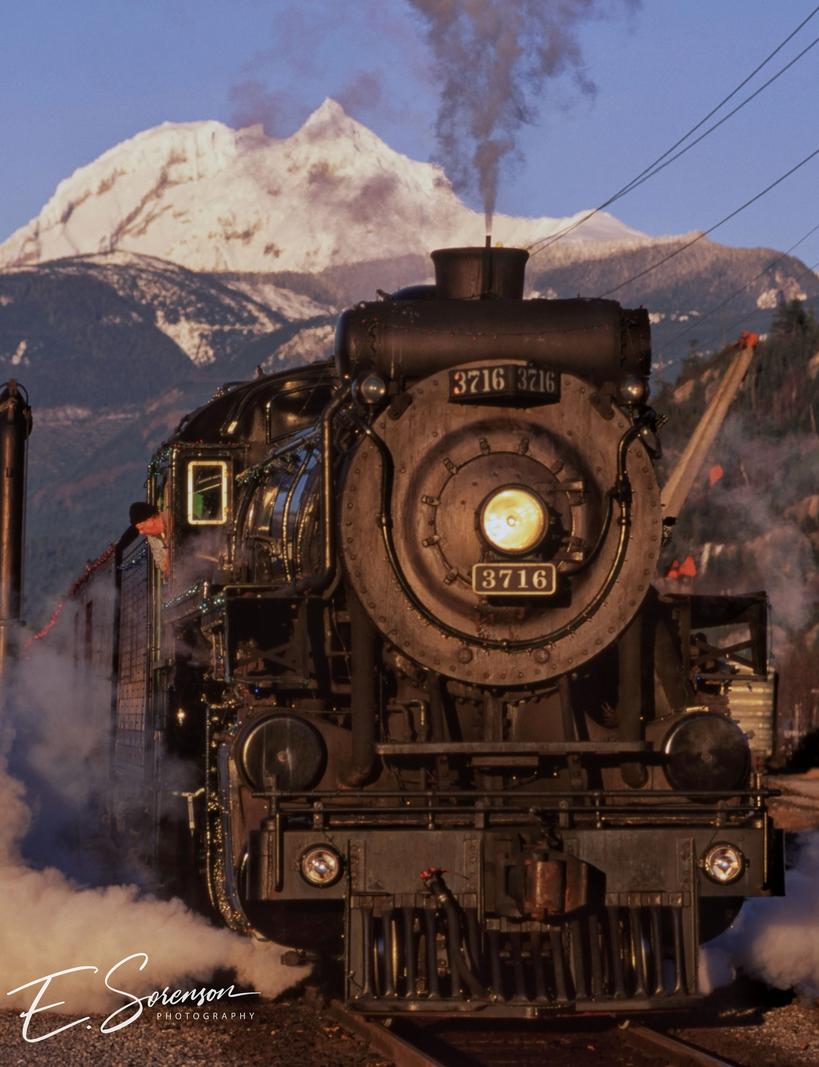
A classic, muscular steam portrait that puts the viewer right on the tracks.
Technically you’ve handled the Velvia scan well, and yes—the picture does communicate power. A head‑on, centred locomotive with the headlight burning and steam rolling is a strong choice for this kind of travel/industrial heritage image. The cool, snow‑lit mountain behind the warm, sunlit engine gives scale and place. I’ll focus on the visible execution and how the frame reads; there’s a lot to like, and a few distractions holding it back from being truly commanding.
TECHNICAL EXECUTION ★★★★
The scan looks clean and detailed—rivets, pipes and the texture on the smokebox are crisp, suggesting good focus and a sufficiently fast shutter. Exposure is well judged for slide film: the snow retains texture, the black engine isn’t crushed, and the steam has shape. Velvia’s characteristic saturation and slight magenta bias are present but mostly under control; the shadows on the locomotive lean a touch magenta/blue, which you could neutralise slightly. I can’t see obvious dust, though a careful pass at 100% on the sky would be wise after scanning. Overall, technically sound and printable; a subtle colour balance and selective contrast tweak would polish it further.
COMPOSITION ★★★
Centred symmetry suits the subject and supports the “power” brief, and aligning the locomotive with the mountain adds drama. The steam plume gives life and the rails anchor the foreground. However, several distractions cut into that strength: the power lines across the top right, the orange crane/boom on the right, and the dark structure intruding on the left edge all pull attention. The coupler is very tight to the bottom border, which makes the frame feel slightly cramped. How deliberate was your choice to line the smokestack with the peak, and could a small step left/right—or a lower viewpoint—have cleared those wires and given the locomotive a little more breathing room?
LIGHTING ★★★★
Warm low sun gives the metalwork shape and separates the engine from the cooler mountain, which works beautifully with film. The headlight adds a focal “eye,” and there’s enough side light to reveal surface detail without blowing highlights. The steam catches light nicely; a touch more rim on the top of the smokebox would have added extra definition, but that’s down to timing and angle. Mixed colour temperatures (warm engine, cool mountain) are attractive and feel authentic. With a slight lift to mid‑tones in the very deep areas, you’d gain a little more texture in the blacks without losing mood.
STORY ★★★★
The frame does transmit power: a looming machine bearing down, steam breathing, headlight on, with a rugged mountain as witness. It suggests travel and heritage without needing a caption. What’s missing for a five‑star story is either motion (wheels or steam streaked by a deliberate shutter choice) or a human element (crew at the cab window) to deepen the moment. The background clutter slightly breaks the illusion of timelessness. Did you consider shooting a burst to catch a denser steam billow or a hand at the window to give character?
IMPACT ★★★★
It grabs attention immediately—big machine, big mountain, clean colour contrast—and would appeal to rail fans and general viewers alike. The impact is softened by the modern clutter: wires and that orange boom read first after the engine. The prominent watermark in the lower left also draws the eye off the subject. Remove those distractions and give the frame a fraction more room at the bottom and it edges towards iconic. As it stands, it’s strong but shy of unforgettable.
CONSTRUCTIVE NEXT STEPS
- Field craft: from the same spot, take one or two steps left/right and a little lower to clear the power lines from the smoke and to hide the orange boom behind the locomotive body; alternatively, plan a vantage on the opposite side of the track where the background is cleaner.
- Decide the motion look: use ~1/500s to freeze crisp steam textures for “mass,” or around 1/60–1/125s as the train moves to streak the steam and rails for “speed.” Bracket a short sequence to compare.
- Post‑processing: in the scan, neutralise magenta/blue in deep shadows (target the blacks), lift mid‑tones slightly, and add a gentle local contrast/dodge on the steam. Clone/heal the power lines and orange crane; tone down or relocate the watermark so it doesn’t compete.
- Framing: if possible, include an extra 2–3% canvas at the bottom next time so the coupler isn’t pressed against the edge; it helps the locomotive “breathe.”
AI Version 2.12