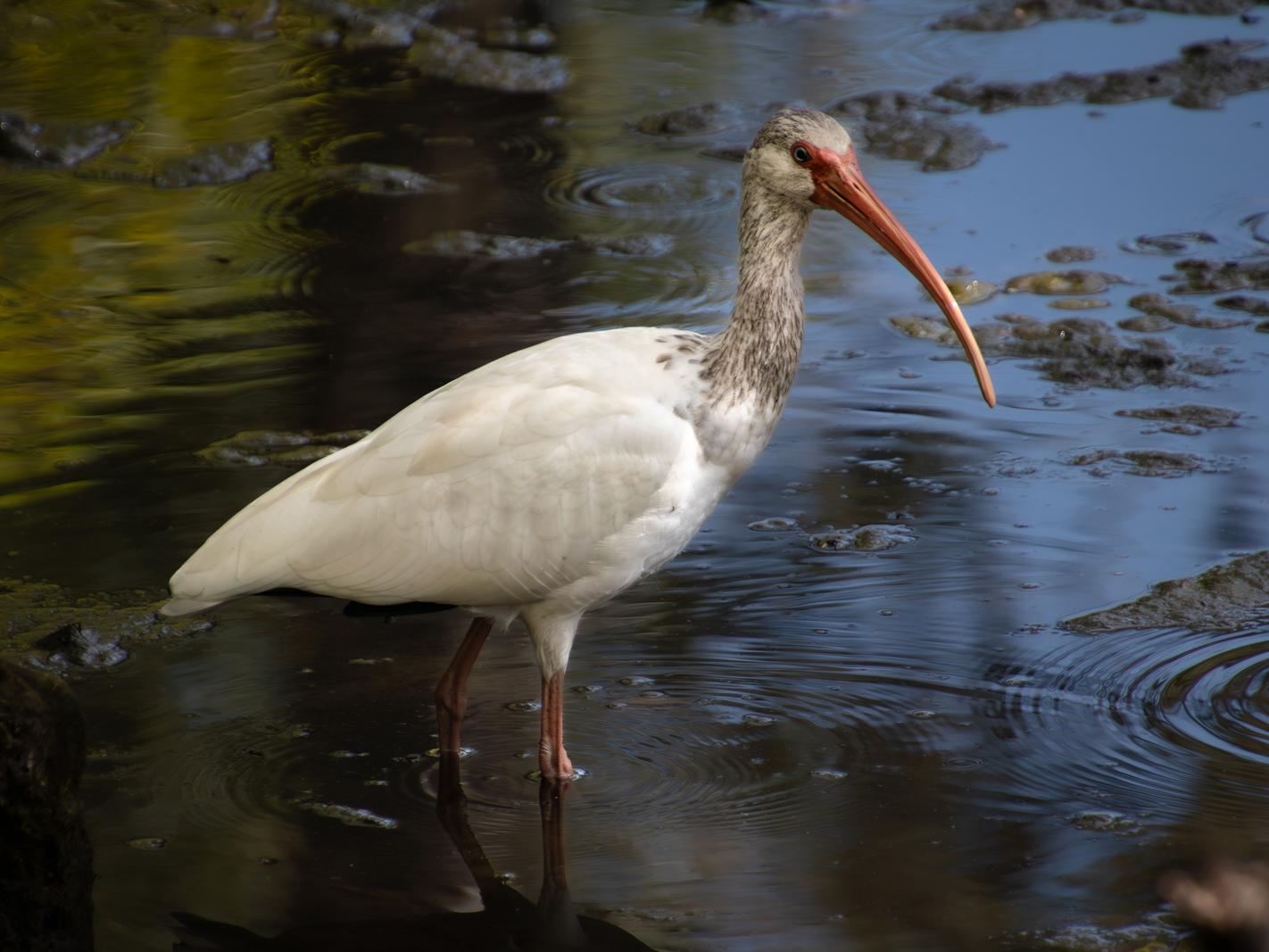
A calm, well-seen study of a young ibis set against moody water.
The darkness works here — it creates separation and a quiet mood without swallowing detail. Your subject is correctly exposed; the white plumage holds texture and the red bill and eye stand out cleanly. The dark water and shaded bank read as natural habitat rather than underexposure, so I wouldn’t brighten the whole frame. If anything, I’d lift the bird slightly relative to the background to reveal a touch more feather detail. This is a wildlife portrait with a hint of behaviour (that poised, searching stance), and the gentle ripples support the scene. Did you consider waiting for a more active feeding gesture — bill in water or a droplet string — to add a stronger moment?
TECHNICAL EXECUTION ★★★★
Focus looks solid on the ibis’s head and bill, with enough detail in the neck feathers to feel crisp. Exposure is well controlled; the bright whites are very close to the limit but not clipped, which keeps the bird luminous against the dark water. Noise is minimal and processing appears natural, with no heavy sharpening haloes or colour artefacts. The catchlight in the eye is small but present; a subtle local lift there would help the gaze pop. I’d also add a touch of micro‑contrast to the bird only, leaving the background soft to maintain separation. To push this to five stars, I’d want razor‑sharp micro detail around the eye and a fraction more texture in the brightest feathers.
COMPOSITION ★★★
Placing the ibis left‑of‑centre facing into open space is a sound choice and suits the long bill. However, the mottled mud patches and the bright yellow reflection in the upper left pull attention away from the head. The partial reflection at the bottom feels undecided — either include more of it intentionally or crop a little higher to remove the truncated mirror. The head overlaps a busy patch of background; a small step to your right or a slightly lower angle could have set the head against a smoother water tone. Consider a tighter 4:5 crop with more emphasis on the head and bill while keeping breathing room in front of the beak.
LIGHTING ★★★★
Soft, shaded light is kind to white feathers and it shows here — you’ve kept detail without harsh contrast. The dark water provides a natural low‑key backdrop that enhances the subject, so the frame doesn’t feel “too dark,” just calm. There’s decent modelling along the bird’s flank and neck, enough to suggest form without flattening. A selective lift of midtones on the bird by about a third of a stop would clarify texture and draw the viewer’s eye more decisively. A tiny dodge on the eye and base of the bill would strengthen the focal point.
STORY ★★★
This reads as a quiet portrait of an ibis pausing while foraging — a true and respectful moment. The circular ripples add life, but the action is subdued and could be any second in a longer behaviour. A more decisive moment — bill entering the water, a captured insect, or droplets arcing from the tip — would elevate the narrative. Think about how long you can wait for that one telling gesture and whether repositioning could place the bird against cleaner water during the strike.
IMPACT ★★★
It’s a pleasant, well‑handled frame with natural colour and a gentle mood. The strong contrast of white bird against dark water gives it presence, but background distractions and a modest moment limit memorability. With a cleaner backdrop and a more active behaviour cue, this could rise quickly. As it stands, it’s a solid, honest wildlife portrait that rewards a quiet look rather than delivering a big hit.
CONSTRUCTIVE NEXT STEPS
✓ In the field, try a lower stance and a slight step to your right so the ibis’s head sits against smoother water; this reduces the busy patches behind the neck and strengthens subject isolation.
✓ Anticipate behaviour: use AF‑C, around 1/1000s, and short bursts when the bird probes or snaps — aim for droplets or prey in the bill to build a stronger moment.
✓ Crop and clean: consider a 4:5 vertical or a modest bottom crop to commit to no reflection; clone out the bright yellow patch top left and a few small bright specks near the bird.
✓ Local edits only: select the bird and raise exposure +0.2–0.3 EV, pull highlights slightly to keep feather detail, add a light clarity/texture boost, and dodge the eye/catchlight for a subtle focal snap.
AI Version 2.0