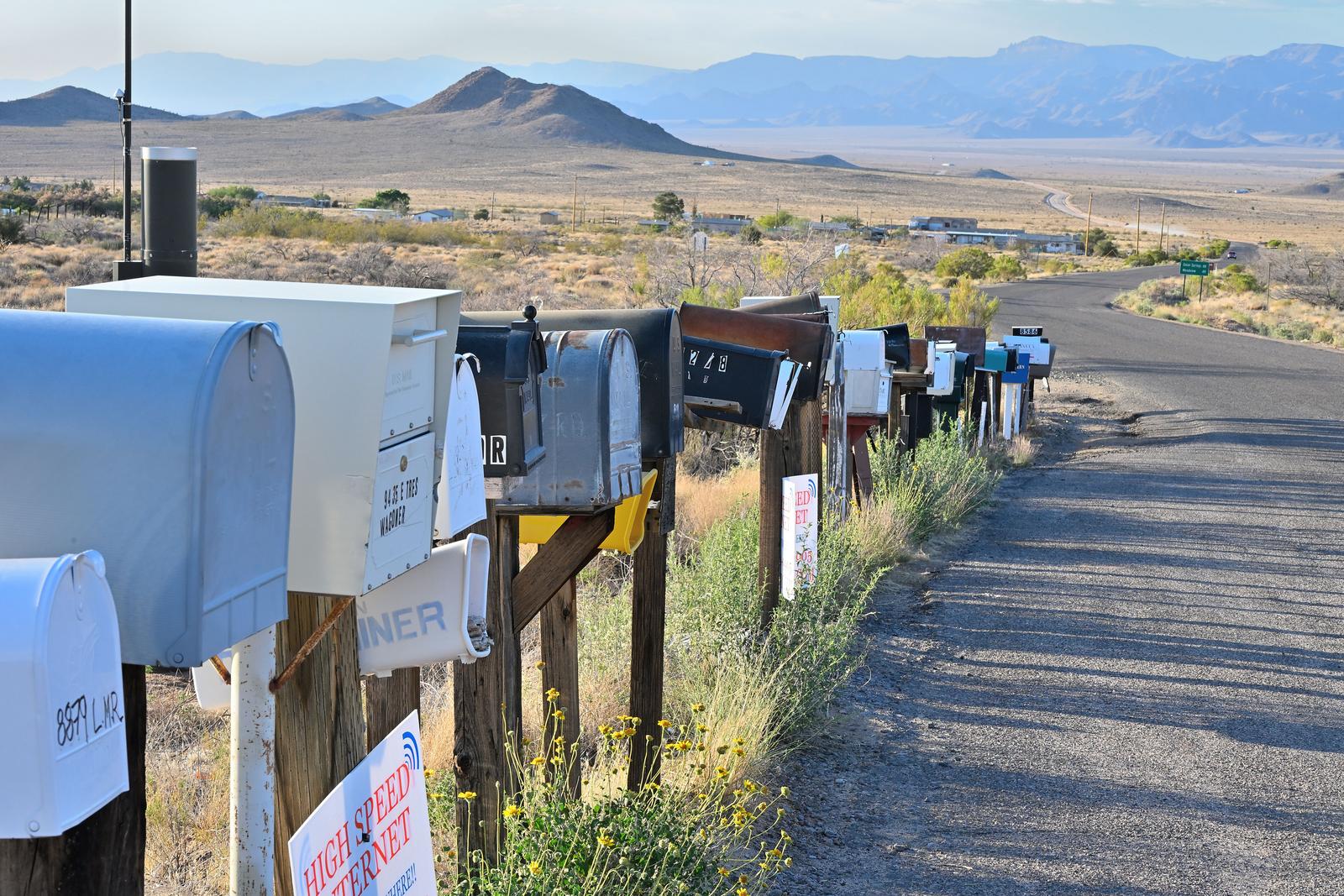
A humble roadside scene with a strong sense of place and a quietly human undertone.
You’ve tapped into that feeling, Luca. The deserted road, the distant trailers and the long line of mailboxes all point to people who are present yet unseen. This sits between travel and documentary: a place study with a social hint. Where the image wobbles is in how the foreground is handled—those oversized mailboxes and the “HIGH SPEED INTERNET” sign push the mood from quiet to slightly cluttered. What did you want the viewer’s eye to land on first: the first mailbox, the bend in the road, or the mountains? Clarifying that will help you refine this good idea into a stronger frame.
TECHNICAL EXECUTION ★★★★
Sharpness is solid across the frame, with good detail in the near boxes and readable textures in the scrub. Exposure is well controlled; the whites on the nearest box are close to the limit but not blown, and the shadows retain detail. Colour feels natural and restrained—no heavy processing or garish saturation. The distant mountains are hazy, which suits the scene, though a polariser or subtle dehaze could add separation if desired. There are no obvious artefacts or haloing. To reach five stars, I’d want slightly cleaner micro‑contrast in the mid‑distance and a touch more control over the brightest white mailbox.
COMPOSITION ★★★
The idea is strong: a diagonal line of mailboxes leading to a lonely road that snakes into the basin, with mountains closing the scene. However, the large, cropped mailbox on the far left and the bright sign at the bottom left dominate and pull the eye away from the journey along the row. The mailbox line and the road compete rather than collaborate; they almost converge, but not quite. A step or two to the right, or backing up and using a slightly longer focal length, would let the line point more cleanly toward the road’s bend and reduce edge clutter. Consider a tighter crop from the left to remove the brightest box and signage. With these adjustments the “endless row” feeling would be stronger and more deliberate.
LIGHTING ★★★
The light is soft and evenly directional, likely early or late in the day, which helps the textures of the metal boxes and the dry plants. It’s pleasant but a bit flat, leaving the scene short of depth and bite. Side‑light at a lower sun angle would throw longer shadows from the posts and boxes, carving shape and reinforcing the rhythm down the line. Watch the near white mailbox; it grabs attention because it’s both large and the brightest tone. Returning at golden hour—or even with thin cloud giving gentle contrast—would lift the mood without theatrics. A slight local dodge and burn could also emphasise the leading edge of the mailbox row.
STORY ★★★
The loneliness you mention is there: inhabited land without people, the ritual of mail delivery standing in for daily life. The “HIGH SPEED INTERNET” sign adds an unintended but interesting note about modernity reaching remote places. Still, the story is more hinted than nailed—there’s no small gesture (an open door, a raised red flag, a single letter jutting out) to play the role of a character. One quiet element of action would deepen the narrative without breaking the solitude. How might the mood shift if one flag were up, or if dust from a distant car curled around the bend?
IMPACT ★★★
The picture is pleasant and thoughtfully seen, and it communicates a sense of place. It doesn’t yet have that immediate “stop and look again” pull because of the busy left edge and the relatively gentle light. Clean up the frame and strengthen the lead toward the road and mountains, and it will hit harder. A clearer visual anchor—a particular mailbox, the road sign, or the bend—would also boost memorability. With those refinements, this could move from a good record to a striking place‑portrait.
CONSTRUCTIVE NEXT STEPS
✓ Reposition: step 1–2 metres to the right and slightly back, then use a longer focal length (around 70–100mm) to compress the row so it points directly to the road’s bend; this reduces the oversized left mailbox and aligns your leading line with the scene’s story.
✓ Lower your viewpoint to just above mailbox height to make the line feel longer and more immersive; check the edges so no bright boxes are half‑cut.
✓ Post‑process: crop from the left to remove the brightest mailbox and the “HIGH SPEED INTERNET” sign; consider gentle dehaze/clarity on the mountains and a small highlight pullback on the nearest white box.
✓ Return in lower, more directional light (first or last hour). Side‑light will create alternating highlights and shadows along the boxes, adding rhythm and depth without needing dramatic weather.
AI Version 2.1