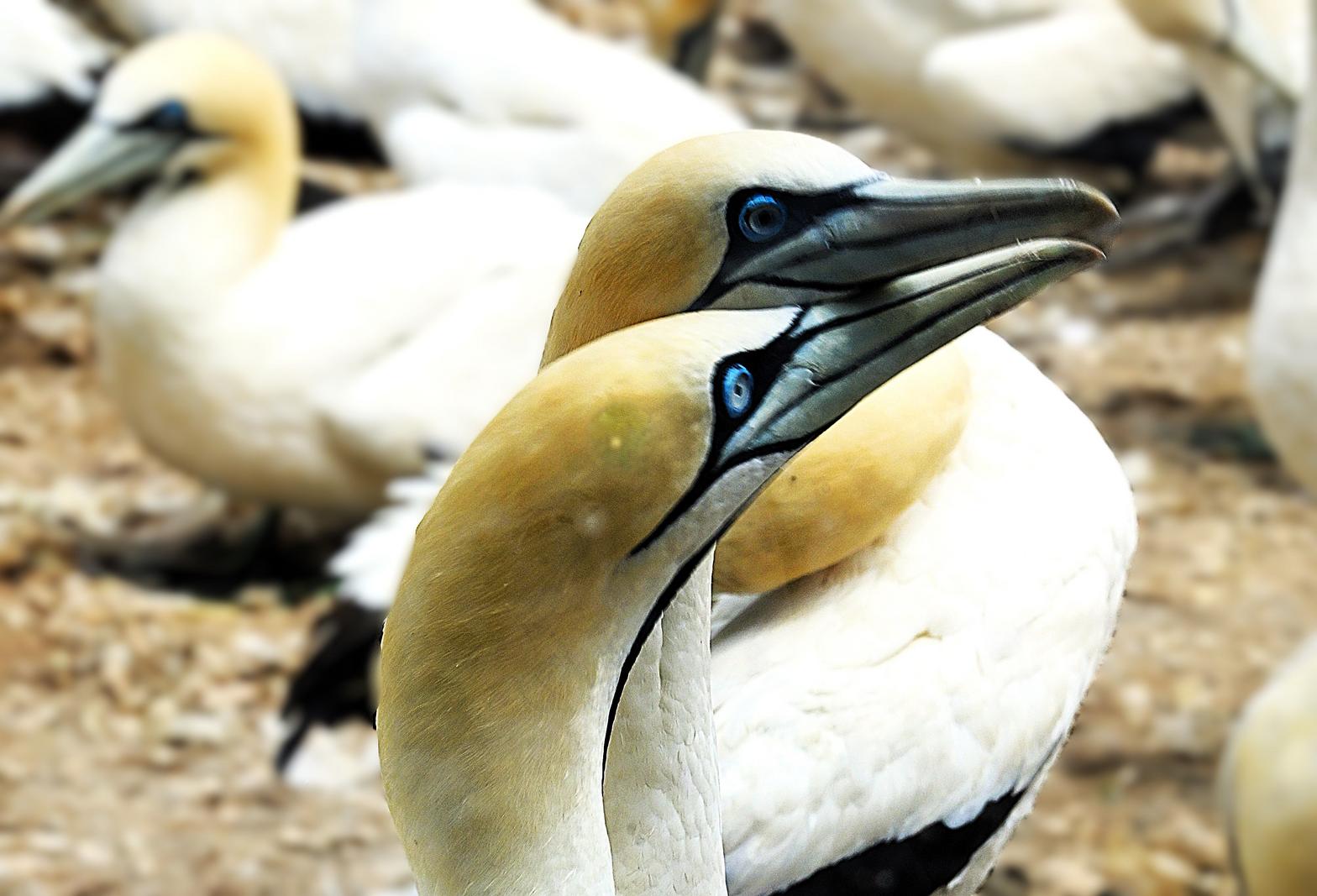
A strong, graphic double‑portrait with those electric blue eyes, but the frame feels a touch cramped and the moment is mid‑beat.
Your file reads as wildlife portraiture shot in a busy colony. The mirrored heads and sweeping neck lines are your strongest elements; they create a clean, rhythmic shape that pulls the eye straight to the birds’ faces. I understand you wanted the chick in play, but as framed the chick doesn’t register clearly—what holds the frame is the pair. Were you aiming for a family narrative or a pared‑back portrait of the adults? If the chick was key, consider how a small shift to place it in a pocket of negative space could make it legible without clutter.
TECHNICAL EXECUTION ★★★★
Detail on the facial markings and eyes is crisp, and exposure is well controlled—whites retain texture without going chalky. The background blur is smooth enough to separate the pair from the colony. Depth of field looks just a fraction shallow at the rear beak tip, but the eyes hold up well which matters most. Processing appears restrained and natural. To reach five stars, I’d like both birds’ eyes and beak lines tack‑sharp while keeping the background subdued, plus a quick spot/heal on the small discoloured mark on the nearer bird’s crown.
COMPOSITION ★★★★
The twin profiles form a pleasing diagonal and the neck curves add elegance. However, the beaks press hard against the right edge, creating unnecessary squeeze; a little breathing room would ease the tension. Background birds, though blurred, still create bright shapes around the beaks, which compete for attention. The base of the necks is cropped abruptly—either include a touch more chest or commit to a tighter, graphic crop. If the chick is part of the story, its current placement means it’s missed; could you have stepped lower or a half‑pace left to place it between the two necks?
LIGHTING ★★★★
Soft overcast light suits white plumage and gives you gentle colour on the yellow heads with those striking cobalt eyes. There’s adequate contrast to define form without harsh shadows. The issue is the bright, out‑of‑focus white birds behind the beaks that pull the eye. A subtle burn on the background whites would tame that and increase separation. A tiny dodge on the catchlights would add life without looking processed.
STORY ★★★
The alignment suggests pair‑bonding, but it stops short of a behaviour moment. Gannets offer terrific gestures—bill fencing, sky‑pointing, or feeding—that would lift this from a portrait to a clear narrative. The chick mentioned isn’t readable enough to add meaning, so the frame functions primarily as an adult double‑portrait. It’s pleasant and dignified, just not a decisive moment. What behaviour were you hoping for, and how long did you wait for it?
IMPACT ★★★★
The mirrored heads and blue eyes make an immediate impression and the tones feel natural. The cramped right edge and bright background stop it short of being unforgettable. With a stronger gesture or a clearer inclusion of the chick, this could jump a notch. As it stands, it’s a solid, engaging wildlife portrait with good fieldcraft and restraint.
CONSTRUCTIVE NEXT STEPS
- Give the beaks 10–15% more space on the right, or go the other way and crop tighter into a square/vertical for a bold, graphic double‑portrait—commit to one approach.
- Change vantage by a half‑step and a slight height adjustment to place the beaks against darker ground rather than bright plumage; this reduces mergers and makes the faces pop.
- Wait for behaviour: gannet “sky‑pointing”, bill fencing, or a feed with the chick. Those gestures will transform this from a neat portrait to a true moment.
- Post: burn the bright background whites by 0.3–0.5 stops, heal the small mark on the nearer bird’s crown, and add a light local contrast/dodge to the irises to anchor the gaze. If you need both heads tack‑sharp, try around f/7.1–f/8 and align the camera parallel to the beak plane.
AI Version 2.12