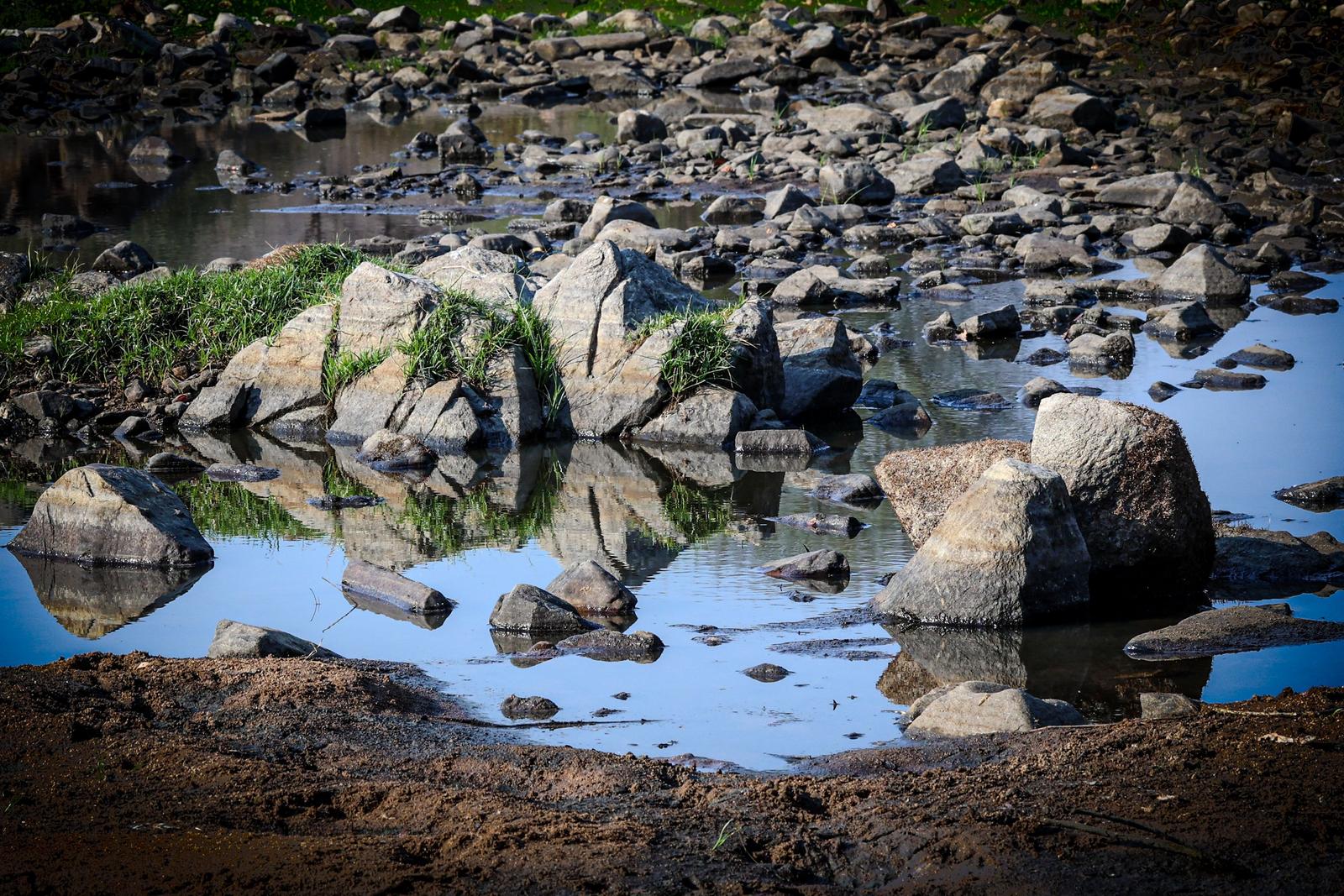
Strong textures and calm reflections, but the frame needs a clear hero to hit harder.
You’re asking the right question. This sits squarely in landscape/nature, and at present it reads as a record of a rocky riverbed in harsh light. The strongest element is the cluster of pale boulders with tufts of grass and their mirror in the pool centre‑left, but they’re competing with a busy scatter of stones and the heavy brown bank along the bottom edge. Impact will come from simplifying around that “hero” and shooting in more purposeful light. What exactly drew you to press the shutter—the reflection, the grasses, or the sense of drought? Decide that first, then compose ruthlessly around it.
TECHNICAL EXECUTION ★★★
Focus and detail are solid across the frame; the rocks look crisp and the reflections are clean. Exposure is broadly controlled, though the midday contrast leaves some specular highlights on the water and slightly muddy, dark pockets in the stones. Colour feels natural and not over‑processed, which suits the earthy subject. There are no obvious artefacts or sharpening halos. To reach five stars you’d need subtler tonal control (gentle dodging/burning) and a capture made in better light to extend the tonal range without pushing files in post.
COMPOSITION ★★
The frame lacks a dominant focal point, so the eye wanders. The large, dark strip of dirt along the bottom edge is visually heavy and drags attention away from the reflective pool. The boulder cluster with grass is your best subject, yet it’s crowded by surrounding stones and placed near the middle with little breathing space. A tighter crop or a lower, closer viewpoint would isolate that feature and let the reflection carry the picture. Consider a vertical frame built around the grass‑topped rocks and their mirror, excluding most of the clutter.
LIGHTING ★★
This looks like hard, mid‑day sun: high contrast, short shadows and a slightly clinical feel. The light flattens the rocks’ shape and makes the water glint rather than glow. Returning at sunrise or late afternoon would side‑light the boulders, carve texture into the stone, and warm the palette. Overcast could also work here, giving soft, specular‑free reflections and richer greens. With better timing, you wouldn’t need heavy processing to create mood.
STORY ★★
There’s a hint of narrative—perhaps a drying riverbed or quiet pause after flow—but it’s vague. Without a clear subject or moment (ripples, a leaf drifting, a bird landing, or evidence of receding water) the scene feels generic. Tightening around the grassed boulders could suggest resilience amid depletion, which is a stronger idea. Ask yourself: what single detail best expresses the place today? Build the frame around that answer.
IMPACT ★★
Pleasant textures and reflections, but the image is easy to pass by because there’s no decisive element or light to elevate it. Simplification, timing, and a more intentional perspective would give it presence. A cleaner composition with a bold reflection could deliver a stronger first read and a reason to linger. To reach four or five stars, aim for either remarkable light or a small, telling moment in the frame.
CONSTRUCTIVE NEXT STEPS
✓ Revisit and build the photo around the grass‑topped boulders and their reflection: get lower and closer, or use 50–100 mm to compress and exclude the messy bank and excess stones; consider a vertical crop in camera.
✓ Shoot at golden hour or under bright overcast to add texture without glare; bring a circular polariser and rotate it to control surface shine while keeping enough reflection for mood.
✓ In post, crop off the bottom 15–20% to remove the dark dirt band; then gently dodge the “hero” rocks and burn surrounding stones/edges to guide the eye; clone a few bright pebble specks near the right edge.
✓ If you want a stronger story, wait for a small event—a ripple, drifting leaf, or a wader stepping through—to introduce a moment without overwhelming the scene.
AI Version 2.0