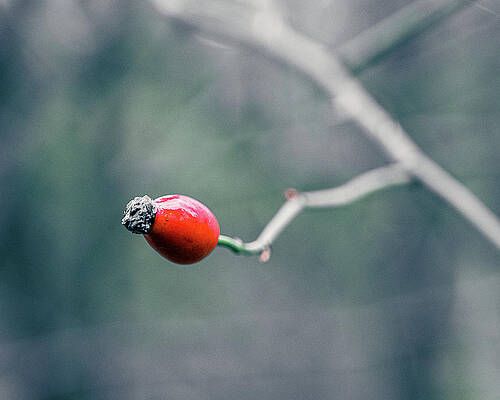
A quiet, wintry minimalist study that lets a single red rose hip carry the frame.
The “best way” depends on who you want as a buyer and what problem your photos solve (wall art, editorial licensing, product decoration). For an image like this—clean, natural and Scandinavian in mood—your strongest path is small‑edition wall prints and sets: build a cohesive series (hedgerow details through the seasons) and sell as A4/A3 prints on fine‑art matte paper, signed and numbered. Offer them where your audience already shops: local design boutiques, cafés, markets, and online via a simple store (Etsy, your own site, or Picfair/SmugMug for print fulfilment). For licensing, upload curated series to Adobe Stock or Alamy with tight keywording; stock can work, but income is volume‑based and rarely high per image. Interior designers are another fit—create a short PDF lookbook showing a 3–6 image set in mock rooms and email locally. Who exactly do you want to buy your pictures: design‑led homeowners, magazines, or brands—and what series could you build that they’d want to collect?
This photograph reads as nature macro/still life: a lone rose hip on a pale twig against a soft, grey‑green background. The red is restrained, the bokeh is gentle, and the scene feels calm and seasonal.
TECHNICAL EXECUTION ★★
Focus appears to land on the rose hip nicely, with a smooth background and no obvious noise or artifacts at this display size. Colour is natural and not over‑pushed, which suits the subject. However, the supplied file is very small in resolution; for print or serious licensing this caps usability and therefore the technical grade. At higher size the tip detail may reveal softness that the tiny file hides. To reach ★★★★★ you’d need a high‑resolution master, critically sharp at the hip’s skin and calyx, and clean enough for an A3 print without visible noise or artefacts.
COMPOSITION ★★★★
The off‑centre placement works well and the thin branch creates a pleasing diagonal that points to the subject. Negative space is generous, letting the red fruit breathe against the muted field. The small out‑of‑focus nub on the branch near the hip adds a hint of secondary interest without much distraction. The crop on the right edge is close to the next bend in the branch; a touch more space there would reduce edge tension. For ★★★★★, control the edges perfectly and consider a framing that uses the curving branch to form a subtle “S” lead‑in.
LIGHTING ★★★
Soft, diffused light gives calm colour and avoids glare on the skin of the hip. It’s pleasant but a bit flat; the fruit lacks a defined highlight and shadow that would shape it into a round form. A small white card or a gentle side light would have given more dimension while keeping the mood natural. The background tone is consistent and supports the minimalist feel. To reach ★★★★★, sculpt the subject with gentle side light or backlight, retaining soft shadows while creating a clean specular edge.
STORY ★★★
The single remaining fruit suggests late autumn or winter—quiet, spare, and resilient. It’s a simple idea that reads quickly, but it stops short of a deeper moment. Consider building a small sequence—frost on the skin, a droplet, or a bird peck—so the frame hints at change or interaction. As a standalone, it’s a neat nature note rather than a fuller narrative. For ★★★★★, capture a decisive micro‑moment that adds tension or transition while staying honest to the scene.
IMPACT ★★★
The restraint and palette are attractive and would sit well as wall art or in an editorial about seasons. The image is pleasant and tidy but not yet unforgettable; it relies on simplicity rather than a striking moment or sculpted light. A stronger sense of form or a bolder gesture from the branch could lift it. For top marks, pair this minimal style with either richer texture/light or a small but surprising detail that lingers.
CONSTRUCTIVE NEXT STEPS
- Shoot a high‑resolution master with a tripod: around 1/125s, ISO 100–200, f/5.6–f/8 to balance sharpness on the hip while keeping the background smooth. Consider a short focus stack of 2–3 frames if wind is calm.
- Add gentle shape: hold a white card just out of frame opposite the light to create a soft highlight and roundness; avoid hard flash.
- Refine the frame: give a little more space to the right bend of the branch and clone out any tiny bright specks on the twig so the eye lands only on the red fruit.
- Think in series for selling: create four seasonal rose‑hip/stem studies with the same angle and palette, print on matte fine‑art paper, sign/number them, and present as a set.
AI Version 2.12