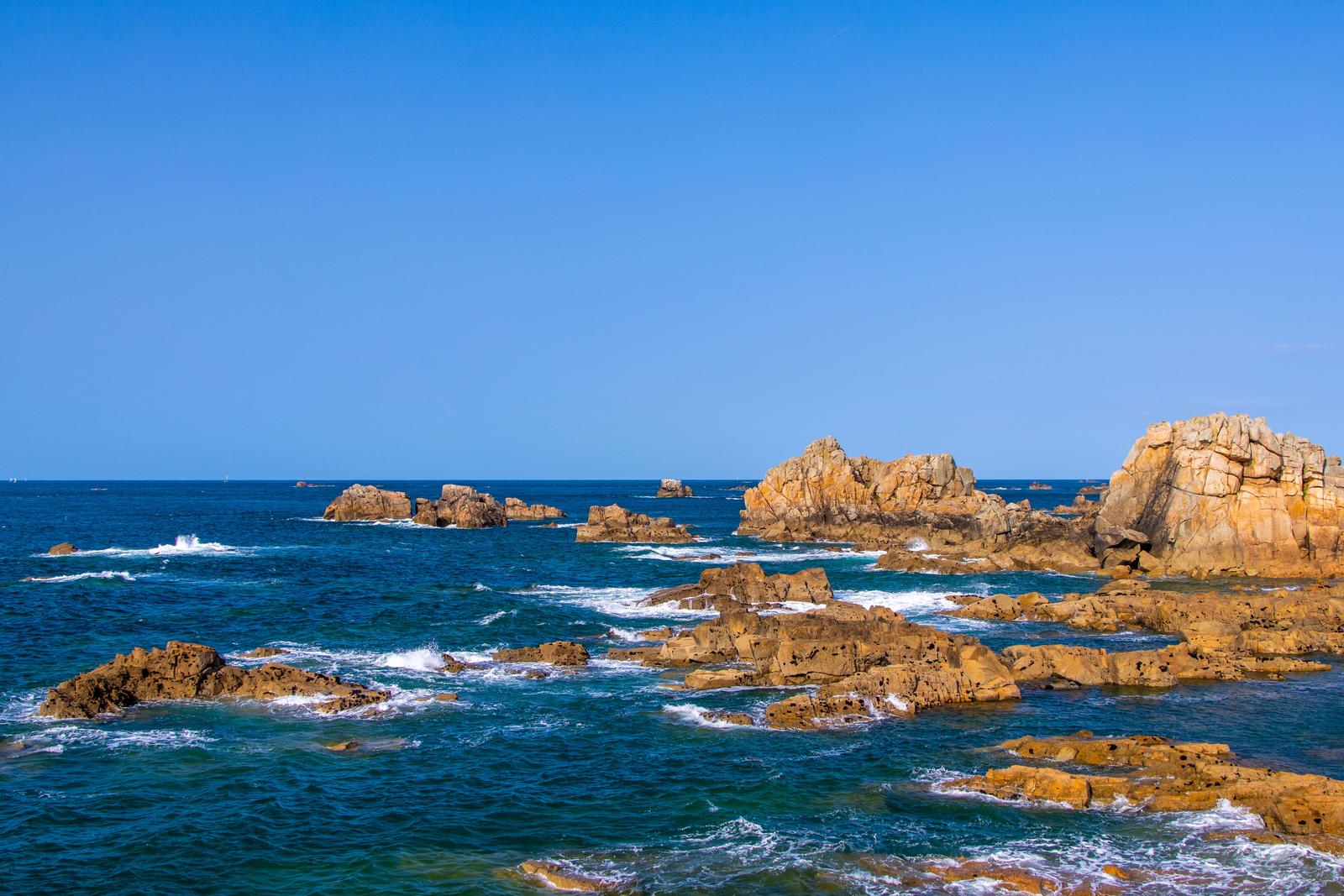
A clean, refreshing seascape with strong colour and texture in the rocks and water, held back by an empty sky.
You’re right to question the sky—it’s a large, featureless block that doesn’t contribute much. This is a straightforward landscape: the rugged ochre rocks and deep blue water are the strength here, especially the big stack on the right and the stepping stones of rock across the mid‑frame. With that in mind, the sky currently occupies too much of the frame for what it offers; cropping or shooting with different weather would help enormously. Overall, the file looks clean and well handled, but the image needs a clearer focal hierarchy and stronger light to sing. Which single formation did you intend as the hero—the big stack on the right, or the chain of rocks leading out—and how might you have framed to commit to that choice?
TECHNICAL EXECUTION ★★★★
The frame is sharp edge‑to‑edge with a straight horizon and good control of exposure; whites in the small wavelets are bright but not problematically clipped. Colour is clean, if a touch enthusiastic—both the blues and the warm rock tones feel slightly pushed, which can edge towards a postcard look. There’s no visible noise or artefacts, and the water detail is crisp, suggesting a fast shutter and solid lens performance. A circular polariser would have reduced surface glare on the water and deepened the sea tone without oversaturation. To reach five stars I’d like a subtler colour grade and micro‑contrast shaping rather than global saturation to let the textures carry the image.
COMPOSITION ★★★
The strongest element is the large rock mass on the right, with secondary interest in the scatter of mid‑distance rocks; these create a natural pathway through the sea. However, the frame feels top‑heavy with empty sky, and the horizon sits near mid‑frame, which flattens the scene. There’s no single foreground anchor to pull the viewer in—getting lower and committing to one foreground rock would add depth and a clear entry point. A 20–30% crop from the top (and a small trim from the far right) would tighten the balance and keep attention on the geology and water movement. If you return, could a lower viewpoint and a wet, textured foreground slab become your opening “note” into the scene?
LIGHTING ★★★
This looks like bright midday sun: clean, contrasty, and honest, but not particularly flattering. The rocks read well, yet the light doesn’t sculpt them—shadows are short and the colour is a little hard. Waiting for late‑day side‑light or broken cloud would add shape to the formations and interest to the sky. A softer golden hour or a stormy front would transform the same composition into something richer. Consider a graduated ND or subtle sky burn in post to hold the upper tones if you must shoot in clear midday conditions.
STORY ★★
The image communicates “rocky Brittany coast,” but it doesn’t capture a particular moment. The sea is in a steady state—no decisive wave crash, no long‑exposure calm, no weather change—so the mood sits in the middle. Including a timed wave breaking against the right‑hand stack, or going the other way with a 1–2 second exposure to contrast silky water against sharp rocks, would add a clear intent. Even a small boat or a lone figure on the rocks for scale could provide a narrative hook, if done respectfully. What specific feeling about Brittany were you hoping viewers would take away, and how might timing the sea’s behaviour help say it?
IMPACT ★★
It’s a pleasant coastal scene with good colour, but the empty sky and middle‑of‑the‑day light keep it from being memorable. Many similar views exist, so without a defined moment or stronger light it doesn’t stand out. Tightening the composition around a single hero rock, or returning in dramatic weather, would raise the presence significantly. With improved timing and a clearer subject hierarchy this could move from descriptive to commanding. Aim for a frame that makes the viewer feel the place rather than just recognise it.
CONSTRUCTIVE NEXT STEPS
- Crop the top by roughly 20–30% (or present as a 16:9 pano) to reduce the empty sky; consider a small trim from the right edge so the main stack has breathing room and the eye doesn’t exit the frame there.
- Return at golden hour or under broken cloud; use a 6–10 stop ND for 1–2s exposures to smooth the sea, or, if you prefer energy, shoot 1/500–1/1000s and time a wave impact against the right‑hand stack.
- Build depth: get lower and closer to a single foreground rock as an anchor; tripod, 16–24mm at f/11, focus a third into the scene for sharpness front to back.
- Post: pull Vibrance/Saturation down 10–15, add gentle dodging/burning to shape the main rock and darken the sky by about 0.3–0.5 stops (graduated filter), and clone the tiny bright boats on the horizon that pull the eye.
AI Version 2.12