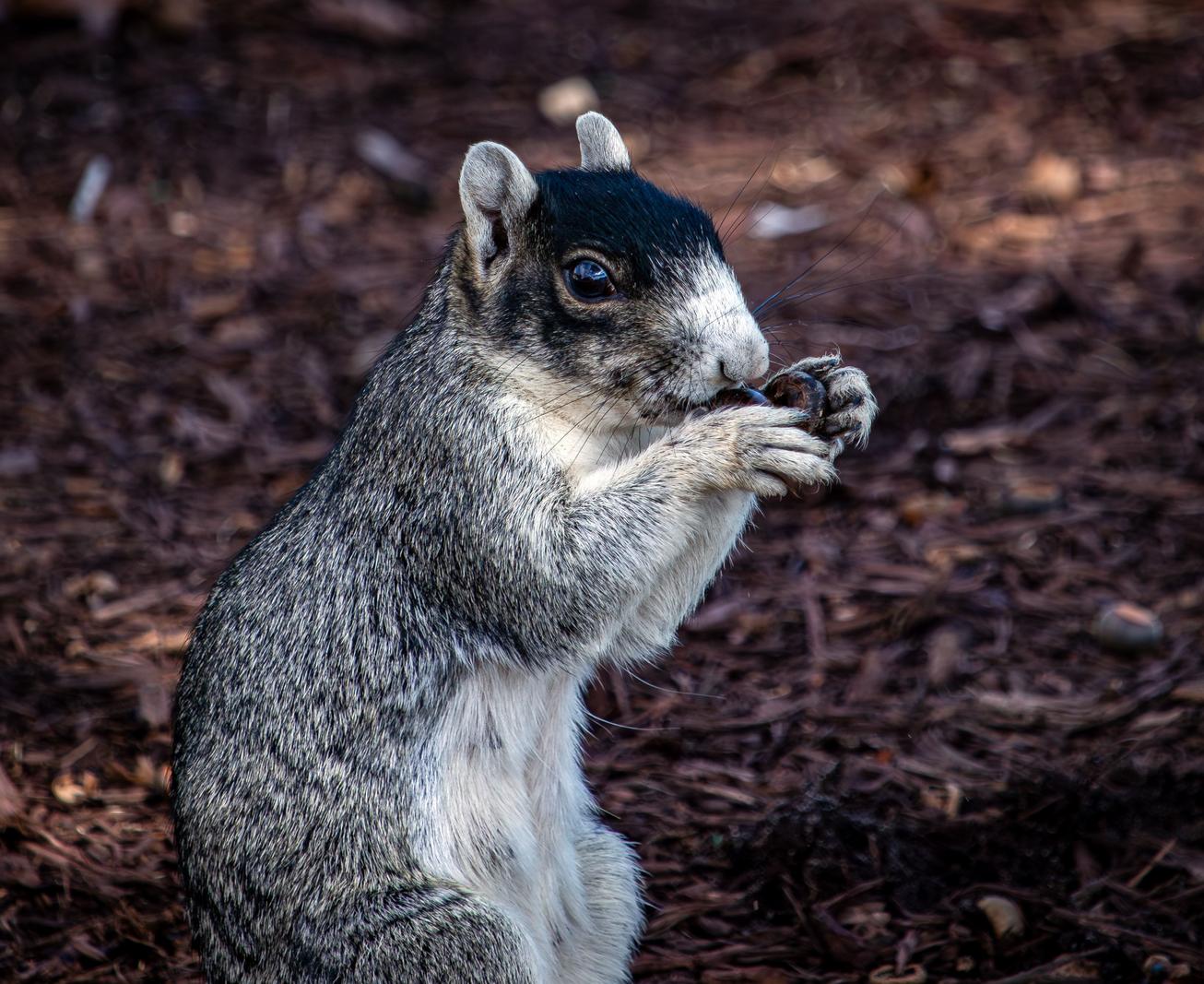
A clean, intimate wildlife moment with good detail and a clear gesture.
Thanks, Gordon. You’ve made a solid wildlife portrait here — the squirrel’s hands, tiny tongue and the nut provide a readable moment. This sits firmly in the wildlife genre, and your intent seems to be a characterful portrait rather than a wider habitat scene. What works best is the crisp eye, natural colours and the tidy separation from the mulch background. To push it further, think about how the background, timing of the behaviour, and edge control could add more punch. What would have changed if you’d waited for a slightly bigger bite or a flurry of crumbs to freeze a more decisive instant?
TECHNICAL EXECUTION ★★★★
Focus is confidently on the eye and the fur detail holds up well; the catchlight adds life. Exposure is largely on point, though the bright white fur on the chest is close to the limit and a touch shiny. Noise is well controlled and colours feel natural and restrained, which suits the subject. The background blur is pleasant, though there’s just enough texture in the mulch to compete a little at full size. A touch of local sharpening on the eye and a slight reduction of texture in the background would refine it further. To reach five stars, I’d want absolutely controlled highlights on the white fur and a slightly cleaner, more uniform background rendering.
COMPOSITION ★★★★
The half-profile pose with the squirrel facing into open space on the right reads well and the raised paws give you a clear focal action. You’re very close to eye level, which is the right choice for connection. The frame feels a tad roomy on the right while the body is tight at the bottom where the belly meets the edge; this creates mild tension. The background has a few brighter crumbs and shapes that draw the eye away from the face. Consider whether a slightly tighter crop around the head and paws, or a small shift right when shooting, would have kept the subject dominant and avoided the busy patches. How might including the tail or more negative space above have changed the balance?
LIGHTING ★★★
The light appears to be soft daylight, giving even coverage and a nice catchlight. It does, however, skim the white fur, which looks a touch hot and reduces texture. There’s limited shaping on the body, so the form feels a bit flat compared with golden-hour side light. A lower sun angle or open shade with a darker background would add depth and separation. A modest, selective burn on the chest fur could tame the brightness without looking processed. Stronger directional light or gentler backlight would elevate mood and dimension.
STORY ★★★
We have a clear behaviour: feeding, with the tongue visible — a nice touch. It’s a pleasant, calm moment rather than a peak one; nothing unusual is happening beyond the nibble. Because the setting is generic mulch, we learn little about habitat or season. A more animated instant — shell fragments flying, a stretch or glance to camera — would add tension and character. Alternatively, placing the animal in a recognisable natural context would enrich the narrative. Ask yourself: what specific behaviour or environmental cue would make this frame feel unmistakably “this time, this place”?
IMPACT ★★★
The image is likeable and competent, and the crisp eye draws us in. It doesn’t quite deliver a “stop and stare” moment because the light is modest and the action is restrained. The earthy palette is appropriate and not overprocessed, which helps credibility. A cleaner background and a more decisive feeding gesture would lift the presence considerably. With stronger light or a rarer behaviour, this could move into standout territory. As it stands, it’s a good, quiet portrait.
CONSTRUCTIVE NEXT STEPS
✓ Wait for a peak feeding gesture and shoot short bursts at around 1/1000s to catch crumbs, tongue, or a head turn; this adds a clear “moment”.
✓ Shift position a step to your right or use a slightly wider aperture (e.g., f/4 instead of f/6.3) to simplify the mulch and keep bright background flecks away from the head.
✓ In post, gently burn the bright chest fur and clone out a few small bright chips around the face; add a subtle local contrast lift to the eye only.
✓ If possible, return in early or late light to get side light that sculpts the form and gives warmer, more dimensional fur texture.
AI Version 2.1