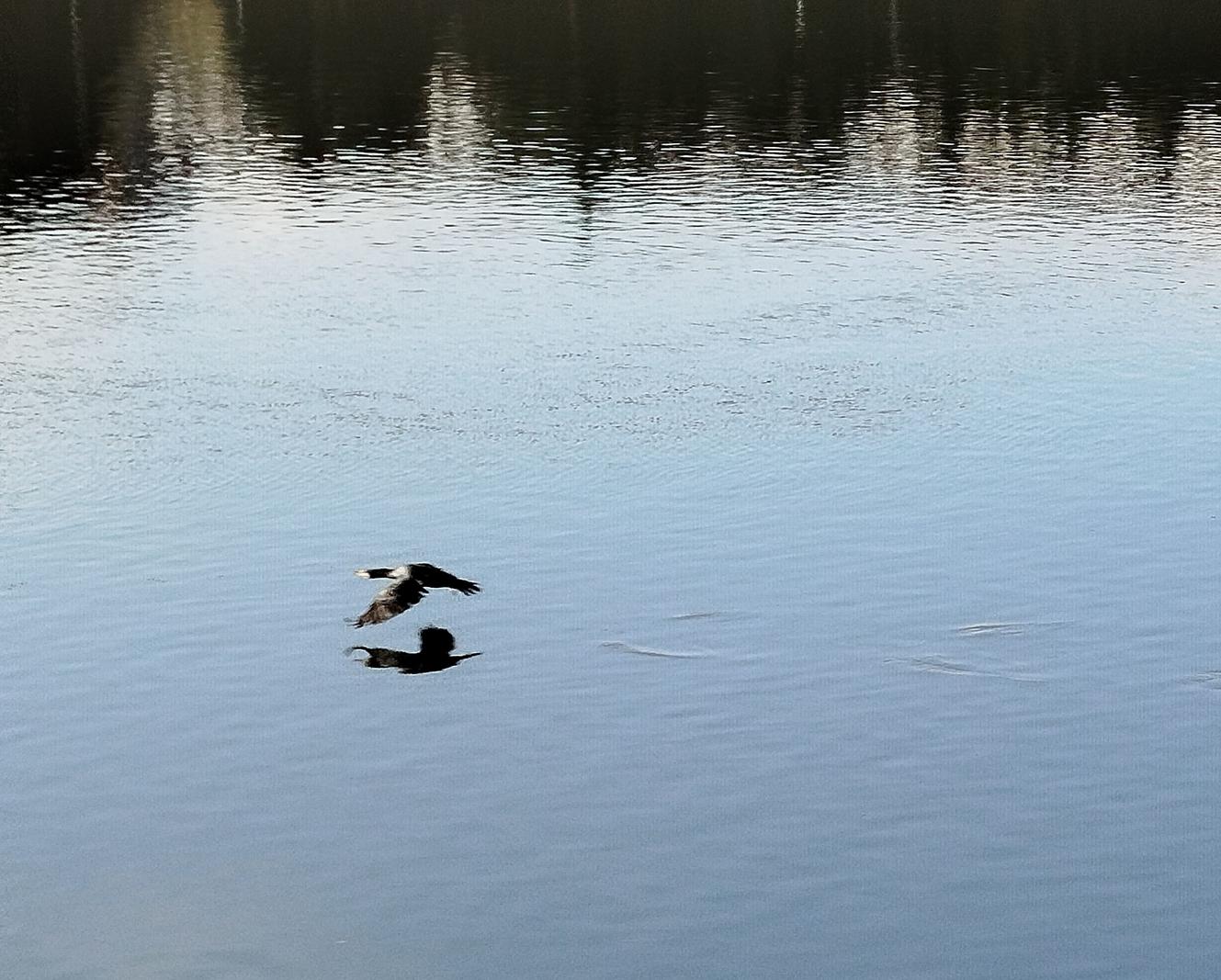
A quiet, graceful moment of a bird skimming a calm surface — the reflection is the hook.
Thanks for sharing, Joaquim. This reads as wildlife/nature, centred on a single bird flying very low over water with a clean reflection and faint ripples. Your timing is good — wings down, bird separated from its reflection — and the restrained colour keeps it natural. I’ll focus on how to strengthen sharpness on the subject and get more authority from the composition, because right now the frame feels dominated by empty water and the bird sits a bit tight to the left edge. What were you prioritising in the moment — the reflection, or the flight direction? That choice will guide both framing and shutter speed next time.
TECHNICAL EXECUTION ★★★
Exposure is nicely controlled; the water holds detail without garish colour and there’s no obvious noise or artefacts. The subject, however, isn’t critically sharp — it looks a touch soft, likely from motion blur or AF not locking on the head. For birds this close to the surface you generally need around 1/2000s with continuous AF tracking and a clustered focus area. The reflection and ripples are clean, which suggests a stable hold, but the micro‑detail in the bird’s feathers isn’t there. A subtle local contrast lift on the bird would help, but it won’t recover missed focus. To reach five stars you’d need pin‑sharp focus on the head/eye and a slightly crisper rendering of feather detail.
COMPOSITION ★★
The bird sits low and left, heading toward the frame edge, which compresses its “runway” and reduces a sense of motion. There’s a large expanse of similar‑toned water and a darker band of shoreline reflection at the top; these don’t add much and the top band pulls the eye away from the bird. The reflection under the bird is the strongest supporting element, but it’s small in the frame. A tighter crop from the top and right would remove the heavy band and push attention toward the subject. In‑camera, leaving more space ahead of the bird (to the direction of travel) would breathe life into the scene. Would a lower viewpoint, excluding the far bank entirely, have given you a cleaner, more minimal plane of blue to fly through?
LIGHTING ★★★
The light is soft and even, which suits the calm water and preserves gentle ripples. It’s also a bit flat on the bird, giving little shape to the body and no obvious catchlight, so the subject doesn’t pop against the background. Early or late light skimming across the scene would add texture to the feathers and more drama to the reflection. As shot, a small local lift to the bird’s midtones and a touch of clarity could separate it from the water. Avoid heavy global contrast; keep the quiet mood while nudging the subject forward. To reach higher, aim for directional low sun or backlight that carves the wings and lights the beak.
STORY ★★★
There is a clear moment: a lone bird skimming so close to the surface that its reflection almost merges with it. The small trailing ripples hint at speed and proximity, which is a nice behavioural note. What’s missing is a stronger gesture — a skimmed wingtip touching water or a clearer profile — to give the frame a defining beat. The far‑bank reflection at the top adds place but dilutes the simplicity of the moment. Cropping to a cleaner field of water would make the “flight over silence” story more direct. Consider whether waiting half a second for a wingtip near the water would have given a peak gesture.
IMPACT ★★
The scene is peaceful and pleasant, but the small subject size, softness, and heavy empty space make it easy to pass by. The idea — reflection plus low flight — is strong; the execution doesn’t fully cash it in. A tighter, more deliberate crop and tack‑sharp subject would raise the presence significantly. Right now it feels like a good sighting rather than a decisive image. With sharper capture and a cleaner, more intentional frame, this could move into the memorable category.
CONSTRUCTIVE NEXT STEPS
- For birds in flight this low, use 1/2000s–1/3200s, auto‑ISO, continuous AF with a small zone on the head, and high burst; prioritise focus on the head/eye.
- Crop this file as a wide pano: remove most of the dark top band and about a third from the right to centre attention on the bird and its reflection.
- In post, mask the bird and add a modest midtone lift and micro‑contrast; keep the water gentle to maintain the calm mood.
- On location, give more space in front of the bird’s path and, if possible, lower your viewpoint to exclude the distant shoreline for a cleaner, more minimal background.
AI Version 2.12