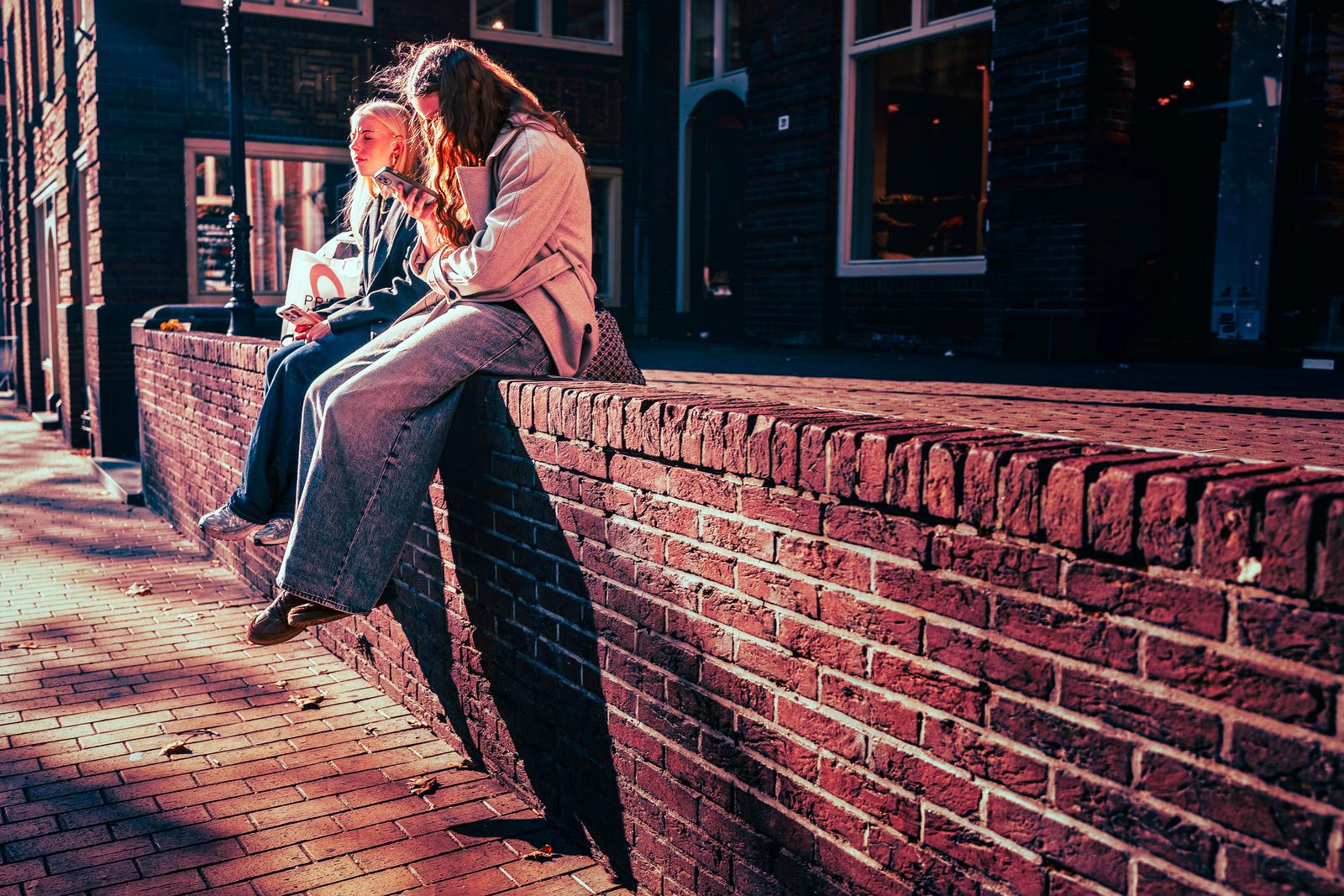
Gorgeous autumn light and a strong diagonal, but the heavy colour grading smothers an otherwise charming street moment.
You’ve definitely found that late‑day sun—those long shadows and the warm rim light on the hair are the picture’s heartbeat. This reads as street photography: two friends pausing on a brick wall, mid‑scroll, the city receding behind them. The diagonal wall leading to the right is a good choice, giving the scene depth and direction. Where it slips is in the processing; the bricks have gone magenta and the overall teal/red split pushes the picture away from the natural mood you noticed. Are you aiming for a stylised, cinematic look, or would a more honest rendering of the light you loved serve the moment better?
TECHNICAL EXECUTION ★★
Focus looks sound and there’s no obvious motion blur; the detail on the brick texture and clothing holds up. Exposure is on the edge—the brighter face is close to clipping, though not ruinous. The main issue is the processing: heavy saturation and a pronounced magenta/teal cast make the scene look artificial. Shadows are a little crushed on the wall and pavement, reducing tonal nuance. Pulling the grade back would let the light breathe and improve colour fidelity. To reach five stars, aim for natural colour balance, open the shadows slightly, and avoid aggressive global contrast or clarity.
COMPOSITION ★★★★
Placing the pair on the left with the long brick wall sweeping to the right is a smart, intentional structure. The dangling feet add rhythm and the cast shadow on the wall echoes the diagonal nicely. The background stays mostly dark, which keeps attention on the subjects. However, the wall occupies a lot of real estate; it risks becoming the subject rather than supporting it. A tighter crop from the right by about a quarter would strengthen the human focus while keeping the leading line. Also consider shifting a step left or right to separate the lamppost from the head of the person on the left.
LIGHTING ★★★★
The quality of light is the photograph’s strength: low sun modelling hair and fabric, with a clean, readable shadow. The warm highlights feel seasonal and the long shadow on the wall adds drama and direction. That said, the grade cools the shadows into cyan and pushes the bricks magenta, fighting the natural warmth. A lighter hand in post would preserve the lovely late‑afternoon feel you found on location. Five stars would require truer colour in the shadows and a touch more control on the bright cheek to keep skin detail.
STORY ★★★
There’s a quiet slice‑of‑life here: two friends resting, phones out, shopping bag in hand—believable and unforced. The scene hints at a day out and the pause that comes with good light and tired feet. However, the moment isn’t quite there; neither expression carries a clear beat, and there’s minimal interaction between them. Waiting for a laugh, a shared glance at the phone, or a passer‑by entering the light would raise the narrative temperature. What specific gesture were you hoping for when you pressed the shutter—and what would you wait for next time?
IMPACT ★★
The strong geometry and hard light give initial punch, but the heavy grade feels louder than the moment itself. The viewer remembers the magenta wall more than the people, which weakens emotional pull. Toning down the processing and tightening the crop would push attention back to the human story. With a clearer beat between the two subjects and more honest colour, this could climb to memorable.
CONSTRUCTIVE NEXT STEPS
✓ Rework the colour: reduce red/magenta saturation by ~20–30%, warm the shadows slightly, and lift them by about +15 to restore tonal detail; use a local mask to lower highlights on the brighter face by −0.3 to −0.5 EV.
✓ Crop from the right by roughly 20–25% to keep the leading line but bring the subjects’ importance up; if reshooting, step half a metre left/right to avoid the lamppost intersecting the head.
✓ Wait for a cleaner beat: a shared laugh, both heads turned to the screen, or a passer‑by entering the shaft of light to add a second layer of action.
✓ Aim for subject separation in camera: f/2.8–f/4, 1/250–1/500 sec, ISO 200–400, and focus on the nearer face to soften the busy background while keeping that great diagonal.
AI Version 2.0