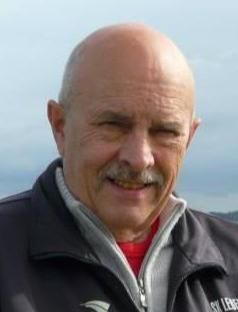
Soft light and a friendly expression, but it reads more like a quick snapshot than a considered portrait.
Short answer: yes, you can edit nature photos—editing is part of the craft. What matters is honesty and intent. For personal work or most publications, global adjustments (white balance, exposure, contrast, colour balance, noise reduction, cropping, gentle dodging/burning) are completely acceptable. Where rules tighten is in “Nature/Wildlife” competitions or documentary contexts: adding or removing elements (sky swaps, cloning birds in/out, moving branches), heavy saturation, composite scenes, and AI-generated content are usually not allowed or must be clearly declared. When in doubt, keep the scene truthful and disclose significant edits. Now, to your uploaded image: it’s a straightforward outdoor portrait; the gentle overcast light is kind, and the relaxed smile and zipped jacket give us a sense of an approachable character in a breezy place.
TECHNICAL EXECUTION ★★★
The file looks clean and reasonably sharp, with acceptable focus on the face, though it’s not critically sharp on the eyes. Exposure is mostly under control; the forehead is a touch shiny, suggesting highlights could be pulled down a little. Colours feel natural and muted, which suits the outdoor setting. I see mild JPEG softness and a hint of compression in the background, but nothing fatal. To reach five stars, I’d want pin-sharp focus on the nearest eye, slightly tamed forehead highlights, and a touch more micro‑contrast on facial detail.
COMPOSITION ★★
The subject is centred and cropped tightly, which makes the frame feel cramped and a little generic. The distant horizon runs through the head, flattening the scene and competing with the face. The bright zip and jacket logo pull the eye from the expression. A small shift—either placing him on the right third with more breathing space or lowering the camera to remove the horizon from the skull—would be stronger. What did you want us to notice first: his expression, the place behind him, or his outdoor clothing?
LIGHTING ★★★
Soft overcast light is gentle on the skin and avoids harsh shadows, which is a plus. However, it’s front‑heavy and flat, so the face lacks shape and depth. A slight turn of the body to create side‑light would carve the features and add separation from the background. A small reflector or even a pale wall on one side could introduce a subtle catchlight and model the face. For five stars, I’d like directional, controlled light that adds dimension while keeping the natural look.
STORY ★★
We meet a friendly man outdoors, but we learn very little beyond that; there’s no clear context or activity to hold onto. The background is non‑descript and doesn’t relate to him, so the portrait feels like a quick record rather than a moment. Including hands, a tool, or a clearer sense of place would add character and purpose. What connection does he have to this location, and how could the frame reveal that? A small gesture or interaction would lift the narrative immediately.
IMPACT ★★
The image is pleasant but easy to scroll past because it lacks a distinctive moment, viewpoint, or shaping light. Nothing is offensive or over‑processed, which is good, but there’s also little to make it memorable. Stronger framing, a cleaner background, and crisper eye focus would raise its presence. Originality comes from either the person’s story or a bold visual choice—right now we have neither. To reach four or five stars, aim for a deliberate composition with a clear point of view and a moment that says something about who he is.
CONSTRUCTIVE NEXT STEPS
✓ Reframe with intent: step left or right and lower your viewpoint so the horizon doesn’t cut through the head; place him on a third with a little more space above the crown, and keep bright logos or zips away from the centre.
✓ Shape the light: turn him slightly to one side and use open shade or a small reflector (a white card works) to create soft side‑light and a catchlight; this adds depth without looking artificial.
✓ Nail eye focus and manage shine: single‑point AF on the nearest eye, around f/3.5–f/4 with an 85–105mm focal length; in post, reduce highlights on the forehead and gently increase clarity on the eyes, and clone out minor distractions like the jacket logo if it’s not important to the story.
✓ Add context for story: include a relevant background element or prop (e.g., the landscape he loves, equipment he uses) and wait for a small, natural gesture—this turns a record into a portrait.
AI Version 2.0