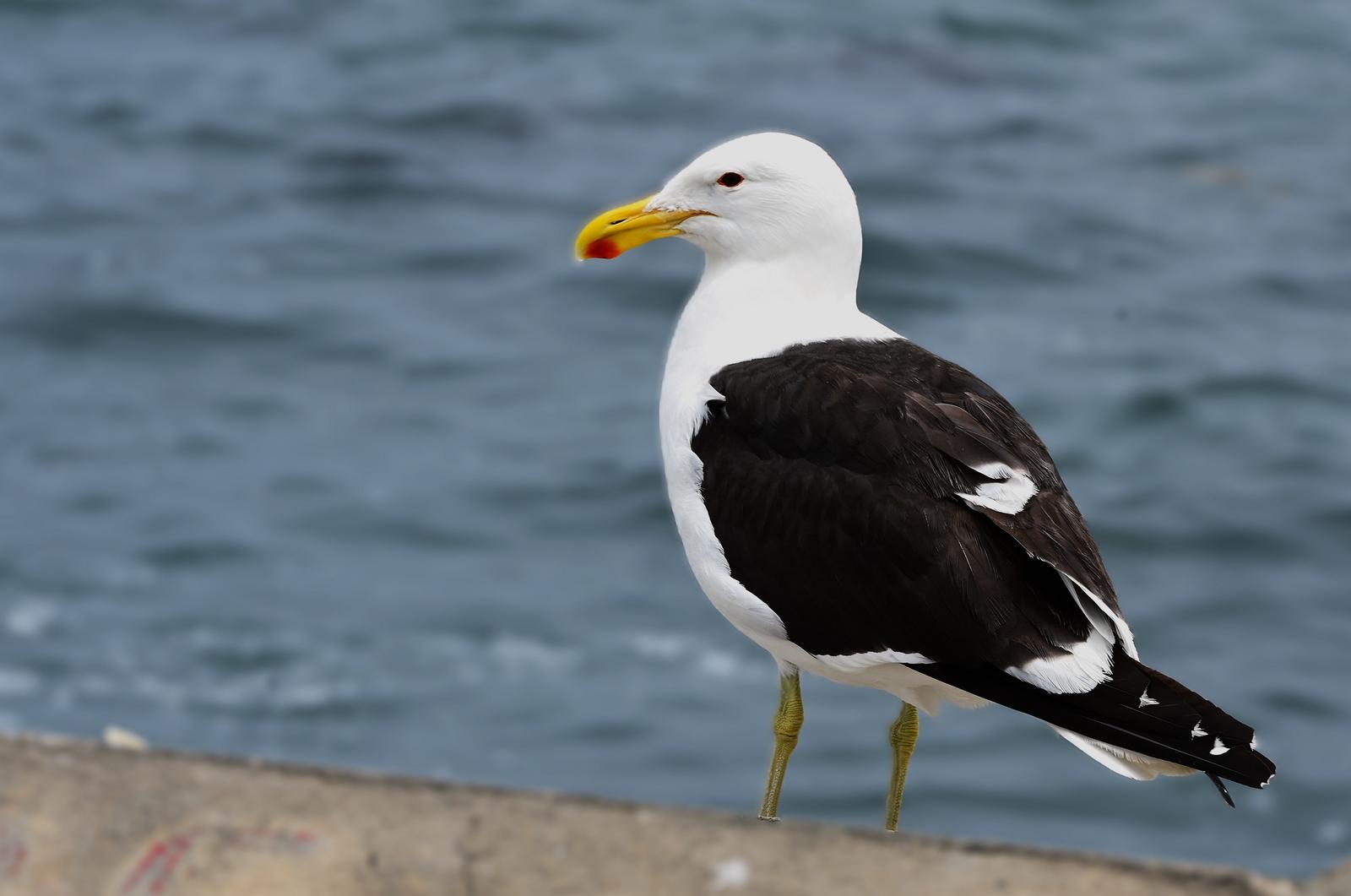
A clean, sharp gull portrait that’s let down by safe framing and flat light.
Thanks, PAT. You’ve made a straightforward wildlife portrait: a lone gull on a harbour edge with soft sea behind. The file looks well handled, and the bird’s black-and-white plumage is rendered cleanly—no small feat. The yellow bill with its red spot gives you a natural focal point, and the blurred water keeps the background simple. My notes below focus on strengthening the moment and refining composition so the “solo” idea reads more strongly. Did you consider a lower viewpoint to include the feet and place the bird higher against the water?
TECHNICAL EXECUTION ★★★★
Focus is good on the head and plumage; feather detail holds up well. Exposure is controlled—whites on the head are close to the limit but not blown, and the dark mantle keeps texture. The water is smooth with no distracting noise or artefacts, suggesting a sensible ISO and decent glass. Colour looks natural and not over‑pushed. If I’m being picky, the eye could use a touch more crispness and contrast, and a hint of highlight recovery on the brightest whites would be prudent. For a perched seabird, this is easily publication‑worthy, just shy of “pin‑sharp perfection”.
COMPOSITION ★★★
The bird sits centre‑right, looking left, which is sensible, but the tail is tight to the right edge and the feet are hidden behind the concrete lip. That loss of feet weakens the stance and makes the base feel heavy; the diagonal slab at the bottom steals attention. More negative space ahead of the beak would let the gaze breathe, and a touch more room behind the tail would reduce that edge tension. A lower, slightly closer angle would lift the body clear of the concrete and simplify shapes. Alternatively, crop tighter into a clean head‑and‑shoulders profile to commit to a graphic portrait. How might the frame feel if the concrete were used as a subtle leading line rather than a chunky block?
LIGHTING ★★★
Soft, overcast light is kind to black‑and‑white plumage and avoids harsh clipping, but it also flattens the scene. The eye lacks a strong catchlight, so the bird feels a little lifeless. Side light at golden hour would sculpt the form and add warmth to the bill and legs. Even on a grey day, turning a few degrees so the bird faces the brightest patch would help a catchlight. A subtle dodge on the eye and bill could add presence without looking processed.
STORY ★★★
“Solo seagull” is clear—the empty sea behind suggests isolation—but the moment is static. There’s no gesture beyond standing, and the concrete base doesn’t add meaning. A call, a wing stretch, or the step before take‑off would introduce a small story beat and elevate interest. You might also lean into the “solo” idea by backing off for more negative space, or by juxtaposing the bird with a distant boat for scale. What behaviour were you seeing before and after this frame that you could have anticipated?
IMPACT ★★★
It’s a pleasant, competent portrait of a common coastal subject. The clean filing and neutral palette work, but the image doesn’t separate itself from countless similar gull shots. Stronger gesture or more intentional framing would give it bite. With better light and either full inclusion of the feet or a decisive head‑and‑shoulders crop, this could jump a level in presence.
CONSTRUCTIVE NEXT STEPS
- Change the viewpoint: drop 20–30 cm lower and step forward so the feet clear the concrete; leave more space in front of the beak and a little behind the tail.
- Protect the whites: dial in −0.3 to −0.7 EV when shooting white heads in bright conditions; use the highlight warning and recover a touch in post if needed.
- Wait for behaviour: hold position for a call, preen, or step—burst at 1/1000–1/1600 s, f/5.6–f/7.1, ISO as needed, single‑point AF on the eye.
- Tidy the frame in post: clone the red marks on the concrete and lightly dodge the eye and bill for a cleaner, more engaging focal point.
AI Version 2.12