A dramatic scene with strong ingredients, but the edit and balance hold it back from its best.
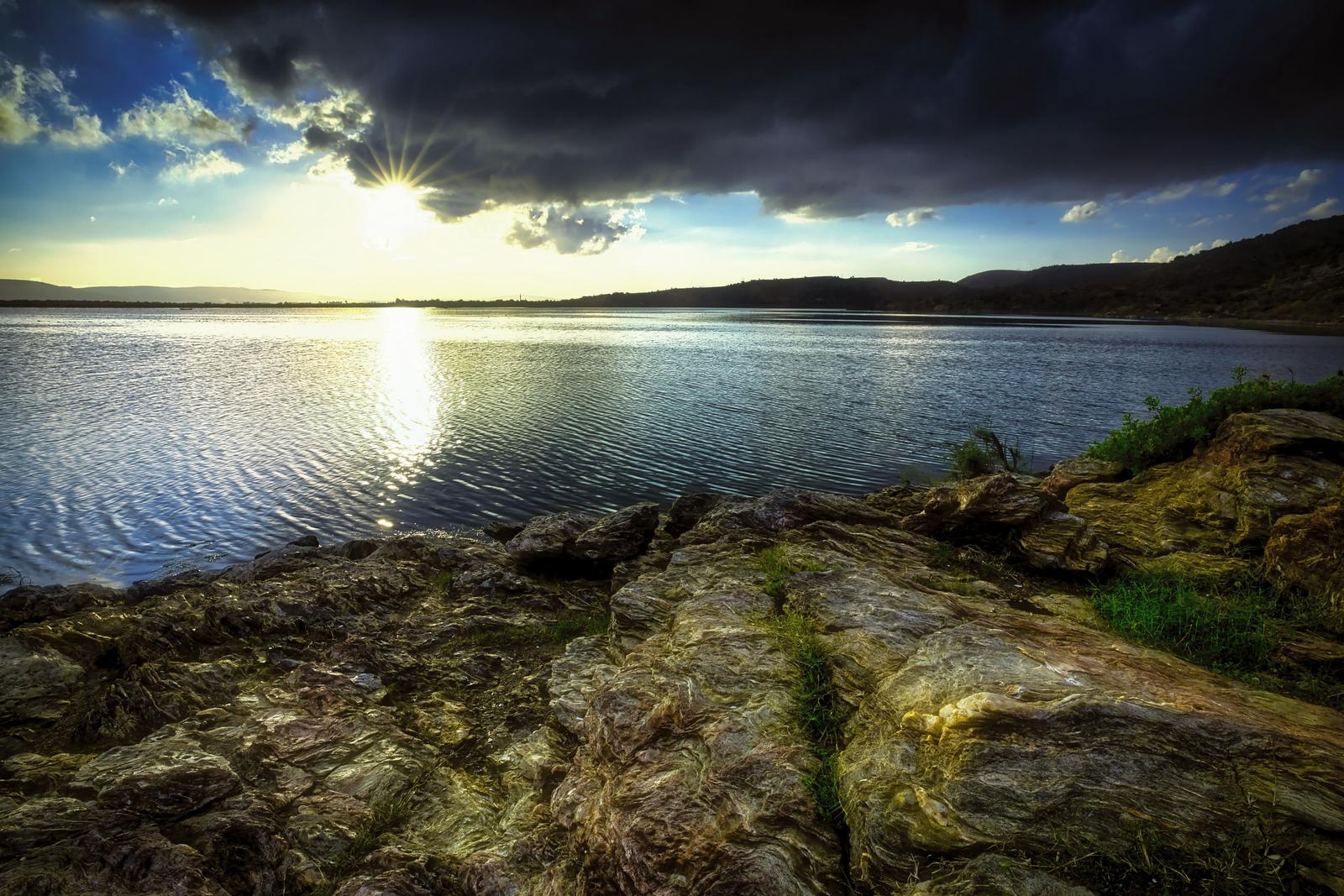
You’re right to question the edit, Rudolf. This is a landscape built on a great moment: sun bursting from under a brooding cloud and a clean reflection drawing us into the lake. The raw capture has a lot going for it, but the processing on the foreground rocks feels a touch heavy—crunchy texture and bright highlights that pull the eye away from the sun path. With a slightly subtler hand, this could step up a level. Ask yourself: what is the photograph really about—the duel between storm and light, or the geology at your feet? The answer should drive both your framing and the grade.
TECHNICAL EXECUTION ★★★
Focus and depth of field look solid and the starburst suggests a small aperture, probably around f/16–f/22, which works here. The exposure holds a wide range, but the rocks show the tell‑tale signs of aggressive local contrast/clarity and possibly tone mapping—detail looks “etched” and not entirely natural. There’s also a slightly cyan bias in the water compared with the warmer light on the rocks. Minor haloing appears along the distant ridge where it meets the bright sky, again pointing to a hard push in post. Dialling back micro‑contrast and colour intensity would restore realism without losing punch. To reach five stars, the file needs a cleaner, more natural grade with zero halos.
COMPOSITION ★★★★
The frame has a clear flow: textured rocks foreground, rippled mid‑water, then the sun and distant hills. The reflection line acts as a strong lead, and the sun sits well off‑centre. However, the top band of very dark cloud dominates; it’s heavier than it needs to be and slightly compresses the scene. A tighter crop from the top (10–15%) would concentrate attention on the light path. Also, the bright patch on the right‑hand rock is a magnet—toning it down would stop it competing with the sun. Consider whether a slightly lower or left‑shifted viewpoint could strengthen the diagonal of those foreground slabs towards the reflection.
LIGHTING ★★★★
The light is the hero: a break in the storm with clean, directional rays and a tidy reflection. You’ve timed it well, and the sunstar adds energy without flaring badly. The challenge is balance—sky versus land. The sky reads a touch heavy while some shadow detail on the right shoreline and within the rocks feels lifted a bit too far, giving a processed sheen. In‑camera, a 2–3 stop soft grad (or a careful exposure blend) would keep the drama while retaining a natural tonal roll‑off. With subtler contrast on the foreground, this lighting would really sing.
STORY ★★★
The scene hints at a simple, effective narrative: calm water under threat of weather, a moment of light breaking through. It communicates place and atmosphere, but it stops short of a deeper moment. There’s potential tension between the ominous ceiling and the welcoming glow, yet the over‑assertive foreground texture distracts from that mood. Would introducing a clearer gesture—like emphasising the reflection path as the main subject, or waiting for a ripple pattern leading directly to it—strengthen the feeling of “light winning over storm”? As it stands, it’s a good record of a lovely moment rather than a scene with a strong emotional hook.
IMPACT ★★★
It’s attractive and competent, but not unforgettable. The heavy texture and slightly punchy colours keep reminding me of the edit rather than the place. Reduce the processing “noise” and let the simple power of that light path carry the frame. A cleaner grade and tighter crop would add focus and presence. To hit four or five stars, aim for restraint and a clearer statement of what the viewer should feel first: the relief of light under storm.
CONSTRUCTIVE NEXT STEPS
- Re‑grade the foreground: reduce clarity/texture by 15–30%, drop saturation a touch, and use gentle dodge/burn to guide the eye—darken the bright highlight on the right rock and lift the mid‑tones along the reflection path.
- Crop 10–15% from the top to lessen the oppressive black cloud and consider a slight right‑side burn to keep the frame centre‑weighted on the sun path.
- On the next shoot, balance sky and land in‑camera with a 2–3 stop soft grad ND, or capture two exposures 1.5–2 stops apart for a manual, natural-looking blend.
- Experiment with a slightly lower, left-shifted position so the strongest rock seams point directly at the reflection; decide whether the story is “storm looming” or “light breaking” and compose for that.
AI Version 2.12