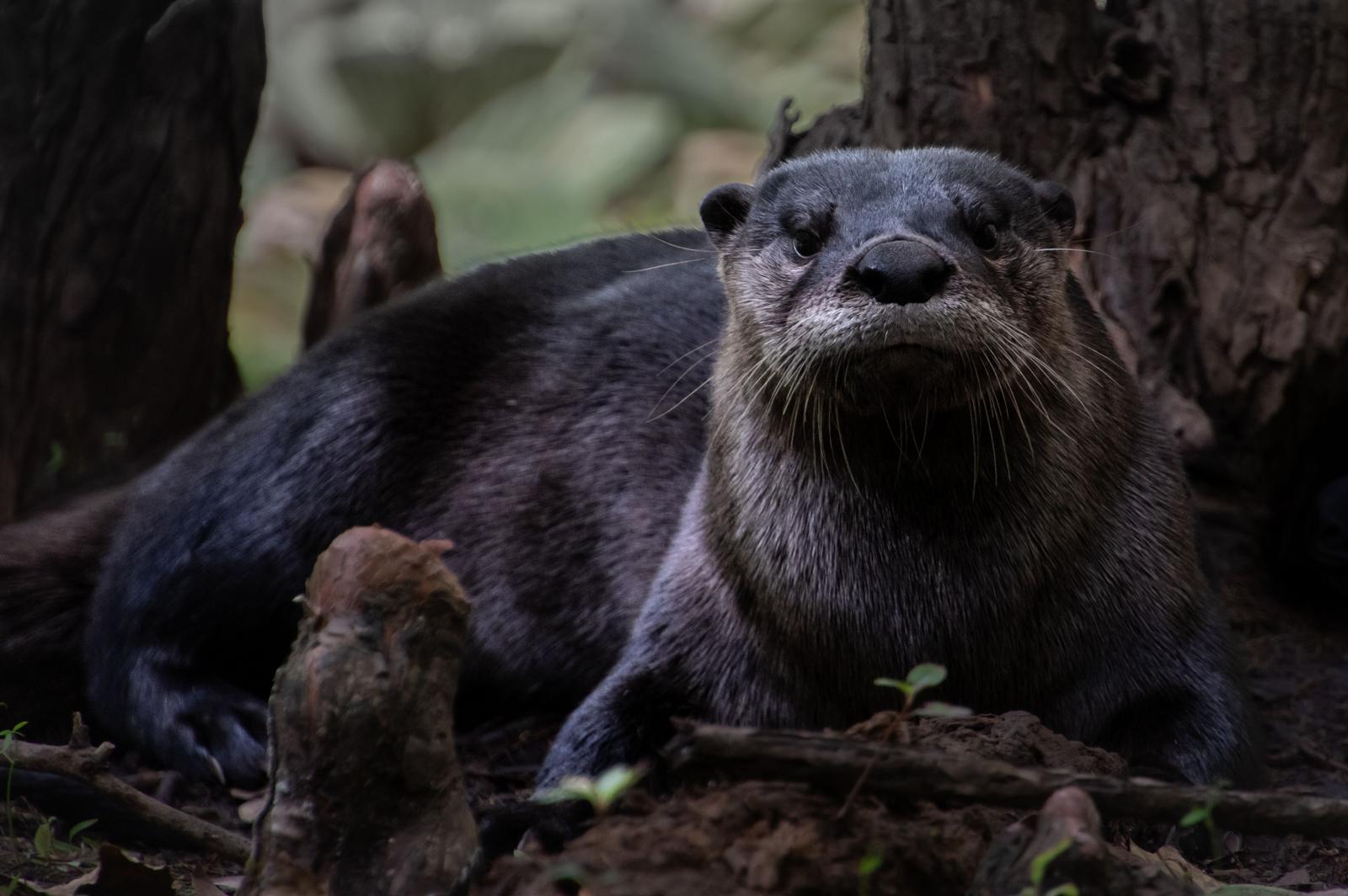
An intimate swamp-side encounter with an otter, held back by busy foreground and flat light.
You’ve largely met your goal: the background falls into a soft, dark blur that keeps attention on the otter, which is the right call for wildlife. Where distractions persist is mainly in the foreground — the stump at lower left, the stick across the bottom edge, and the bright sprout near the chin all pull the eye. The otter’s alert posture is great, but the eyes sit in deep shade with little catchlight, and focus appears to land closer to the nose than the eyes, softening that vital connection. This is a wildlife portrait that has mood and habitat cues, but it would benefit from a cleaner frame and a touch more light in the eyes. Could you have shifted a step lower and to your right to separate the head from the tree trunk behind the ear and lose some of that foreground clutter?
TECHNICAL EXECUTION ★★★
Exposure is well controlled in a tricky, low-contrast swamp; the dark coat holds detail and there are no blown highlights. There’s modest shadow noise and a slight softness around the eyes suggesting focus favouring the nose or a shutter speed on the edge for a moving subject. Colours are natural and muted, which suits the setting, and the processing looks honest. A crisp eye and a small catchlight would lift the whole frame. For five stars here I’d want tack-sharp focus on the nearer eye, cleaner shadows (either via higher ISO and faster shutter with good noise reduction, or better support), and micro-contrast selectively added to the face.
COMPOSITION ★★★
The otter is nicely angled toward us and fills the frame comfortably; the curve of the body leads into the head. However, the base of the frame is crowded: the stick running across the bottom edge and the stump at lower left compete for attention. The tree trunk merging near the right ear slightly muddles the head’s outline. A tighter crop from the left and bottom would strengthen the subject and remove competing shapes, and a lower, slight-right viewpoint would have put the head against smoother background tone. To reach four or five stars, aim for an even cleaner perimeter and a background that doesn’t touch the head at all.
LIGHTING ★★★
The soft swamp light is kind to texture and avoids harsh contrast, which suits the scene. The drawback is flatness: the eyes fall into shadow with no catchlight, so the animal feels a bit lifeless despite the strong stance. The whiskers catch some light, which is a nice detail, but the face needs a brighter plane. Waiting for the otter to lift its head toward the sky or turning so the eye reflects water would create that spark without flash. To reach the top tier, look for early/late light or an angle that sculpts the muzzle and lights the eyes.
STORY ★★★
This reads as a calm, respectful portrait in the otter’s habitat; the earthy tones and cypress roots tell us where we are. The direct look to camera hints at wariness, which gives a subtle tension. It stops short of a behaviour-led moment—no feeding, grooming, or interaction—so the narrative is limited. A simple gesture like the otter sniffing the air, holding a fish, or half-submerged would add that extra layer. What behaviour did you observe that you might anticipate next time to deepen the story?
IMPACT ★★★
A solid, moody portrait that nature lovers will enjoy, but the lack of eye sparkle and the foreground clutter keep it from being memorable. The frame has the ingredients—clean tones, engaging stance, authentic habitat—yet it needs a cleaner rim and a stronger focal spark to really sing. With sharper eyes and a tidier base, this could be a portfolio keeper. Aim for a moment with a small gesture or catchlight to raise the presence.
CONSTRUCTIVE NEXT STEPS
✓ Prioritise the eye: use a single AF point on the nearer eye and aim for at least 1/500–1/800s; raise ISO if needed and stabilise with a monopod, knee, or beanbag to keep things crisp in the shadows.
✓ Clean the frame in-camera: if safe and ethical, drop lower and shift a step right to separate the head from the tree trunk; avoid letting sticks cross the bottom edge.
✓ Seek a catchlight: wait for the otter to angle toward brighter sky or reflective water; even a slight head turn can light the eyes without flash.
✓ Post-processing: crop in from the left and bottom to remove the stump and bottom stick; subtly dodge the eyes and muzzle, add a touch of local contrast to the face, and run gentle noise reduction on the darkest fur.
AI Version 2.0